Start here
The short answer
Philodendron is a varied group, so identify the plant and growing setup before choosing a feeding routine. Noot should be diluted according to its label and used with appropriate watering, not adjusted by leaf color or collection-wide habit.
A heartleaf vine and an upright plant need separate notes
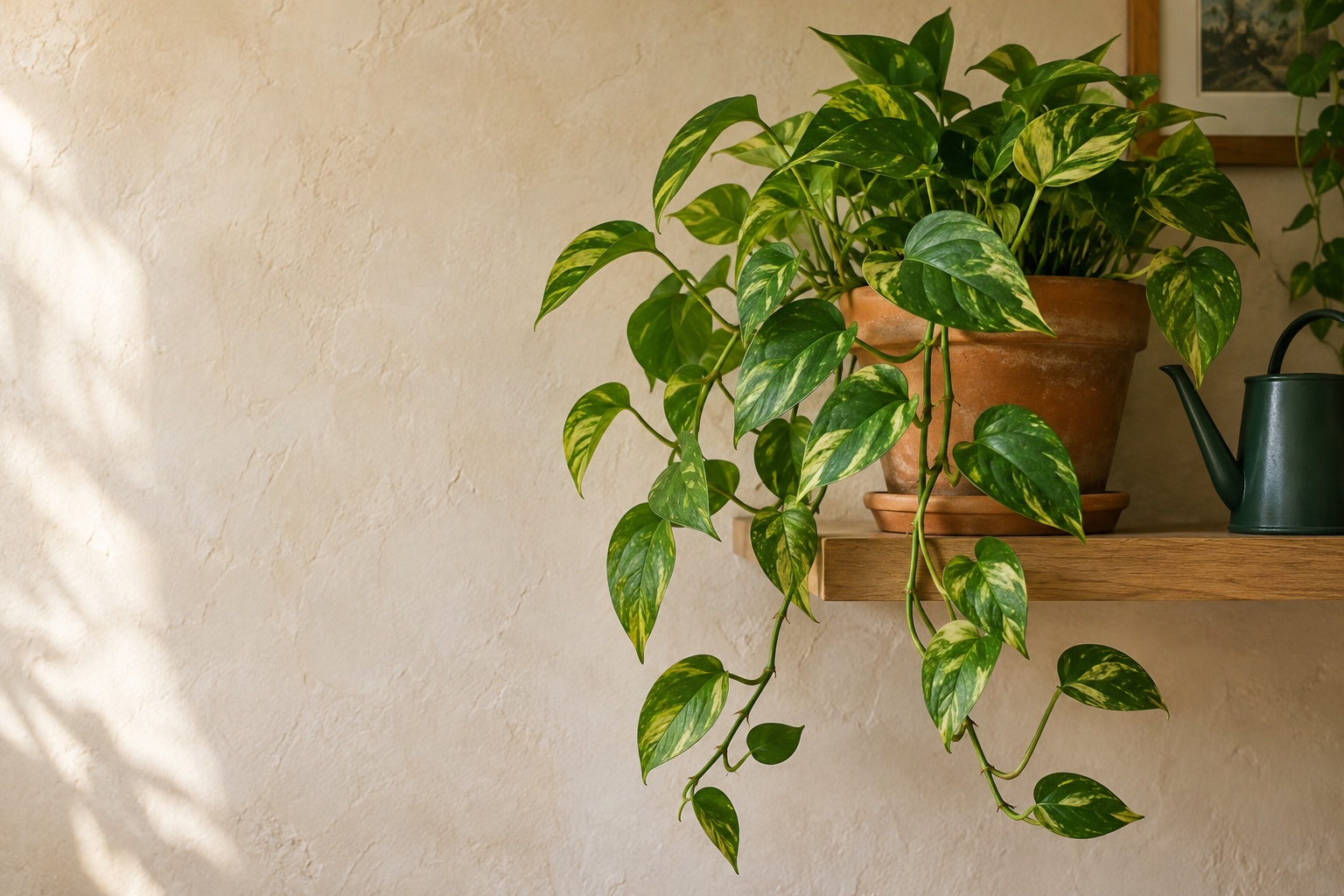
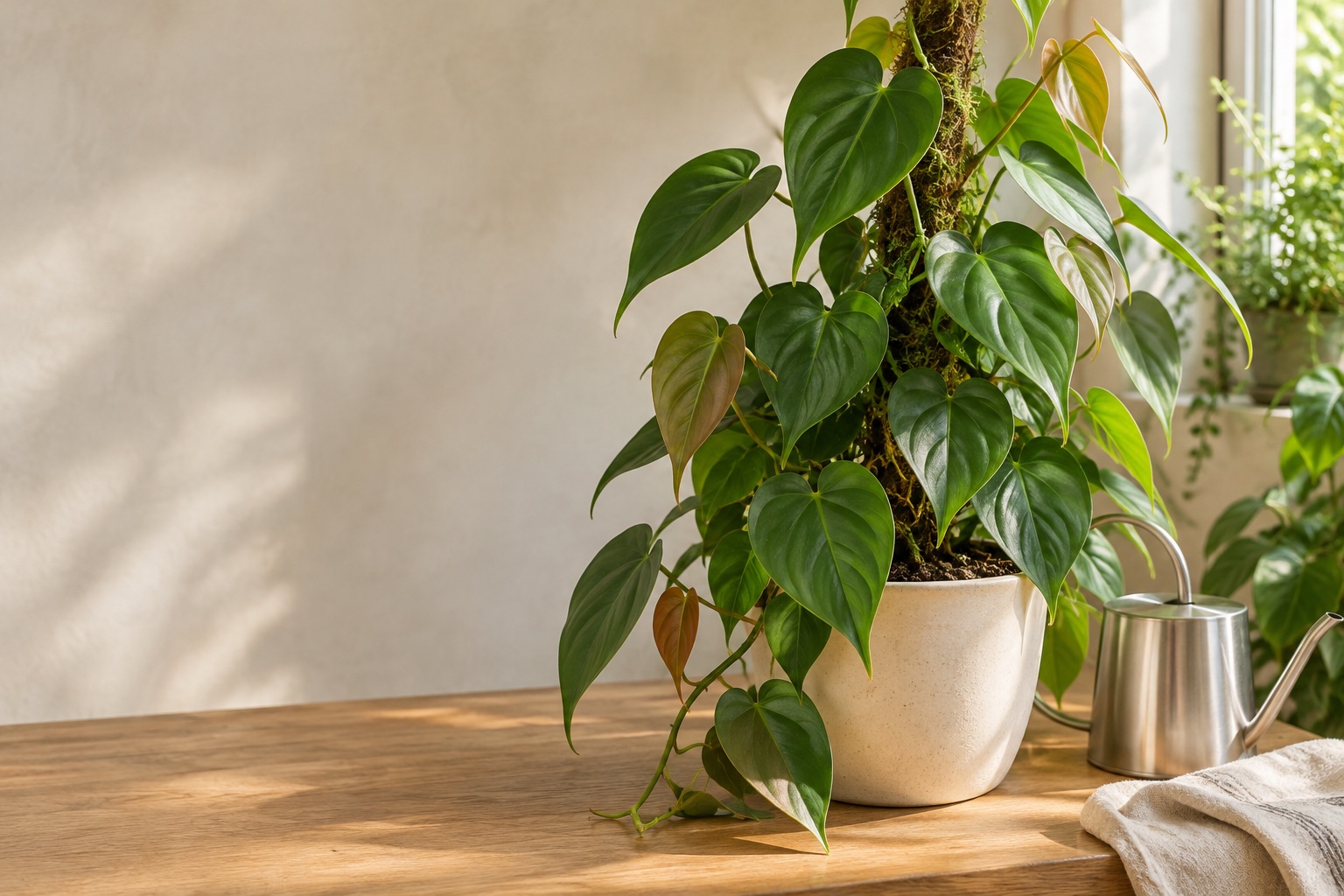
Philodendrons include climbing forms and plants that grow upright from a compact base. Clemson describes substantial variation in shape, mature size and foliage color; some cultivars naturally produce reddish or orange new leaves. Do not compare every plant in the genus with the appearance of a green heartleaf vine.
Write the cultivar or species name from the nursery label into your care record. If the label only says “philodendron,” keep that uncertainty visible until you can identify the plant more closely.
Sources: Clemson Cooperative Extension
Match the growing conditions before adjusting food
Illinois Extension recommends warm conditions and bright, indirect light for best results. Clemson describes moist but unsaturated soil, no standing water, and either dilute water-soluble feeding or an appropriate time-release product. The specific product instructions determine how to apply the option you choose.
This is a useful reason to keep individual pot notes in a mixed collection. Similar leaves do not tell you whether two containers hold the same mix or already contain the same fertilizer.
Sources: University of Illinois Extension · Clemson Cooperative Extension
Keep Noot’s dilution consistent
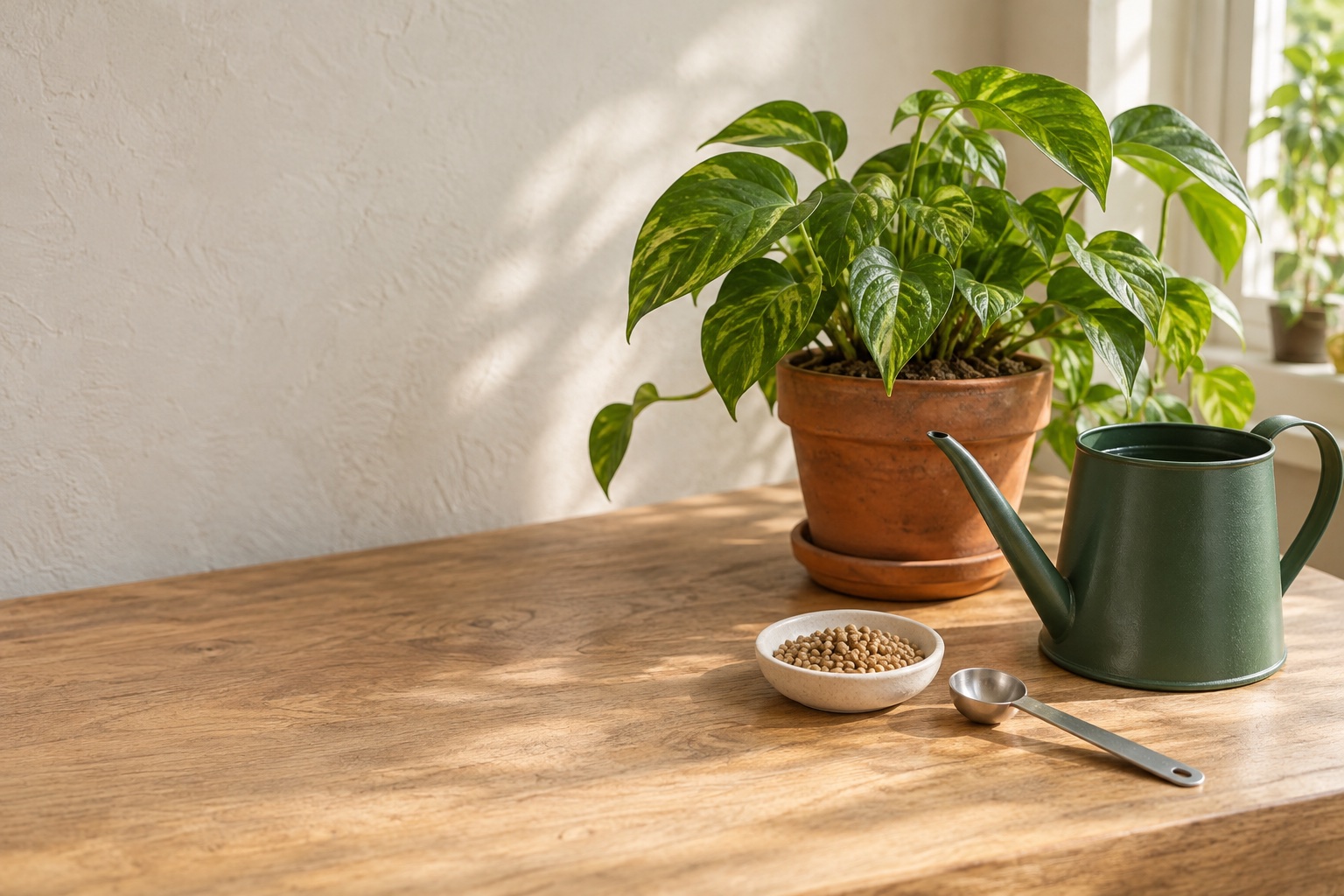
Mix one teaspoon of Noot into half a gallon of water, following the label. Check your particular plant in the finder and use the diluted mixture during appropriate normal watering. Never apply concentrate directly. Noot’s organic inputs, trace minerals and 16 microbial strains do not change the need to measure.
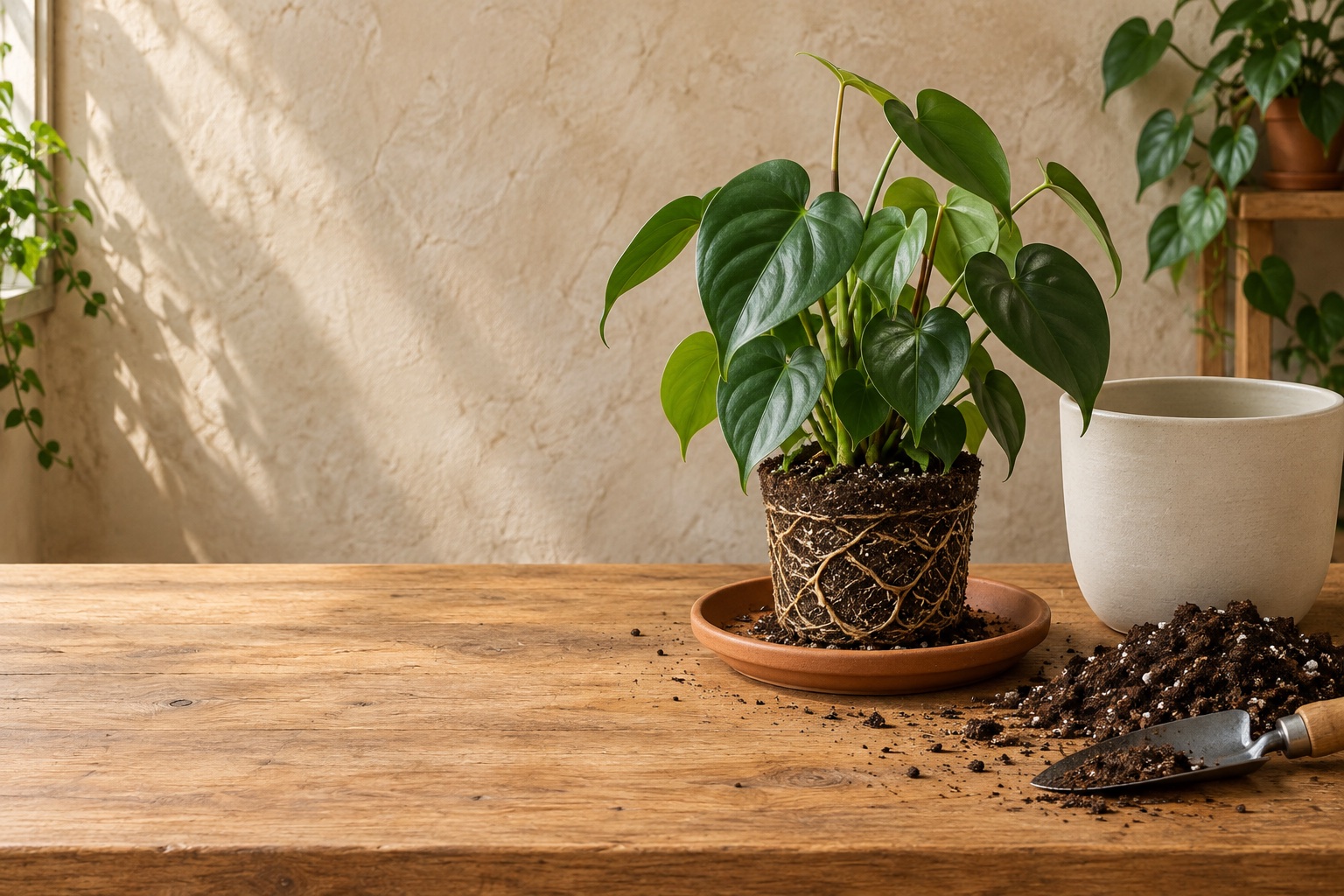
If your collection includes a newly repotted plant, an established vine and a recently purchased specimen, check each pot before using the same can. Note any fertilizer already in the medium. One prepared batch does not mean every pot is ready for the same care that day.
Sources: Noot
Make a compact collection card
Use one line per plant, with enough information to hand the routine to someone else. A card can live beside the collection or in a shared note. This is especially helpful when several similar pots are displayed together and their nursery labels have been removed.
- Plant name and a small identification photo.
- Growing medium and the last repotting date, if known.
- Existing fertilizer and the last measured application.
- Any current exception, such as a recovery period or unresolved symptom.
- The date it was checked, even when no watering was needed.
Describe new growth before judging it
Choose a newly opened leaf as a starting reference and photograph it under the same room lighting later. Record the color you see without assuming that every change is a deficiency. Compare with the same plant rather than a different cultivar from a shopping page.
If a plant begins declining, bring its card and photos to a knowledgeable plant professional. They provide context that a close-up of one leaf cannot. Keep Noot at its labeled dilution while deciding whether the routine is appropriate; increasing several inputs at once makes the history harder to understand.
Common questions
Does red or orange new growth mean my philodendron needs more fertilizer?
Some cultivars naturally have colored new leaves. Identify the plant and compare its normal growth before treating color as a nutrient problem.
Can I give every philodendron in my collection Noot on the same day?
Check each pot, existing fertilizer and watering need first. Follow the Noot label for plants and situations where use is appropriate.
Sources & further reading
- PhilodendronClemson Cooperative Extension
- PhilodendronUniversity of Illinois Extension
- Noot plant-food directions and product informationNoot