Start here
The short answer
Pothos feeding starts with the actual pot and its growing conditions, not the length of the vine. Use an appropriate labeled plant-food routine, check for fertilizer already in the mix, and measure Noot rather than guessing a dose.
Identify the plant and its normal color
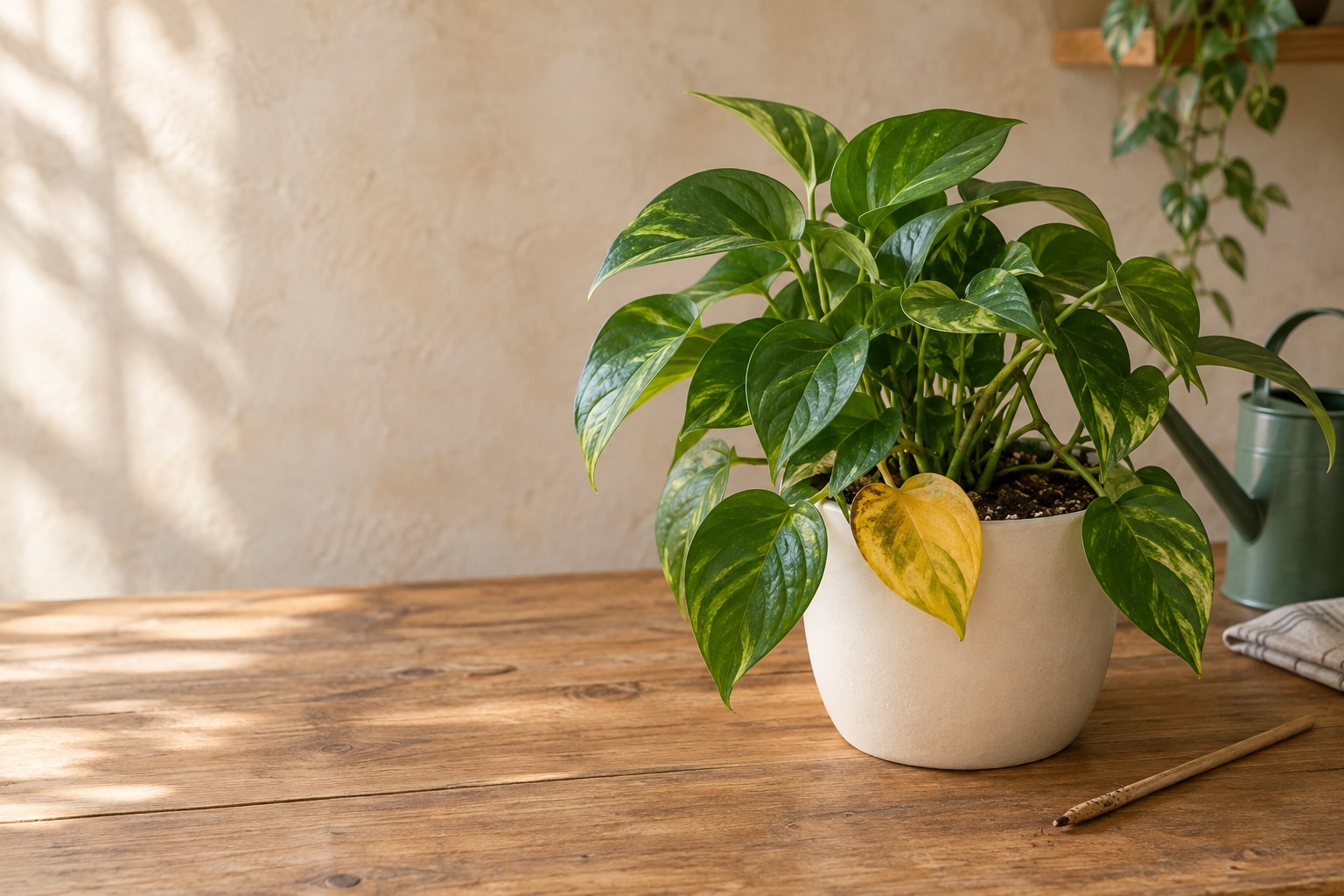
Golden, green and variegated pothos can look quite different. North Carolina Extension describes Epipremnum aureum as a trailing or climbing plant that prefers bright, indirect light but tolerates lower light. Clemson notes that lower light can reduce variegation and that some plants called “satin pothos” are actually Scindapsus.
Keep a photo of the plant’s usual foliage with its name. That gives you a more useful reference for a color change than comparing a golden cultivar with an unrelated all-green plant.
Sources: North Carolina Extension Gardener Plant Toolbox · Clemson Cooperative Extension
Bring the hanging pot within reach
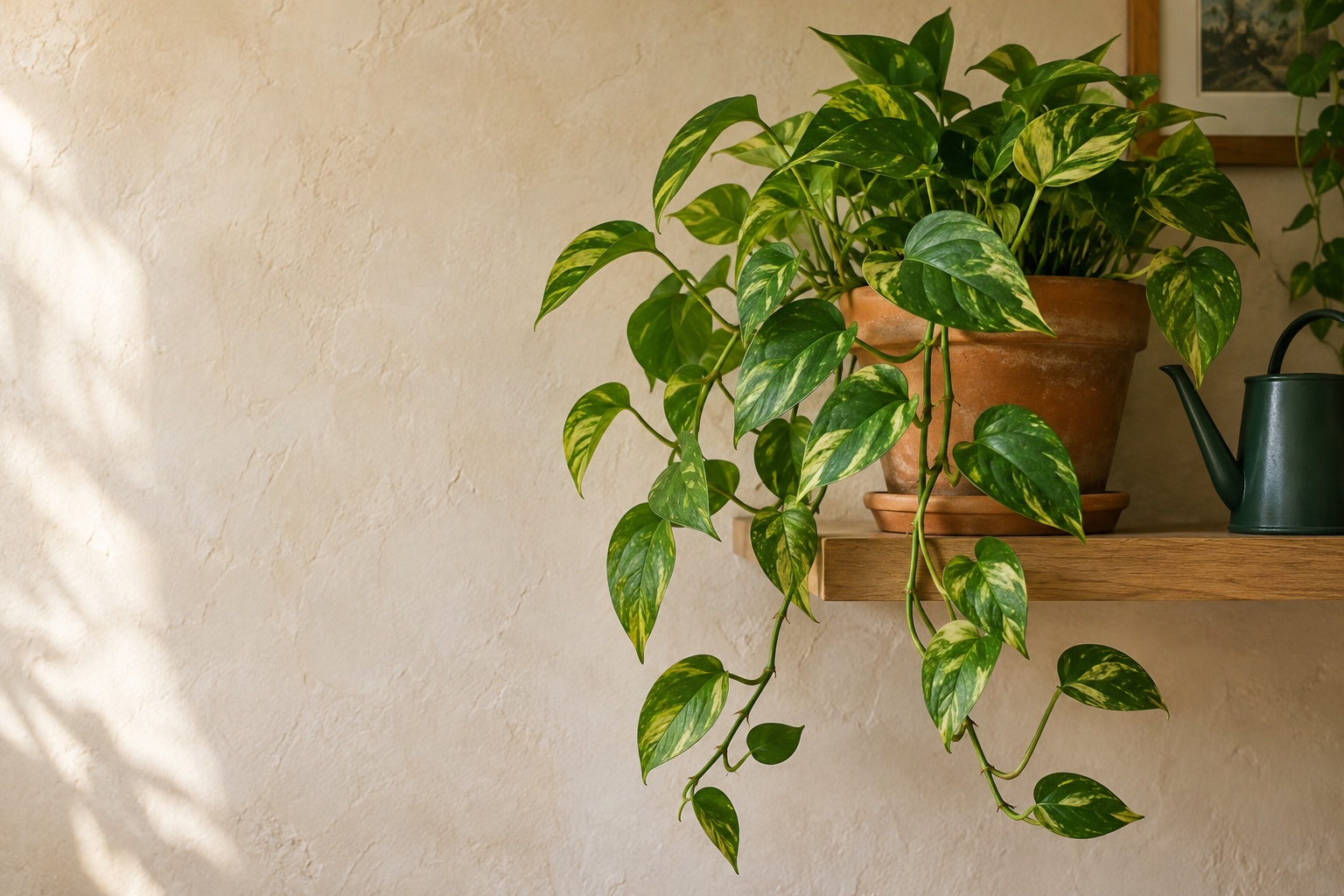
Clemson recommends an airy, well-draining mix and allowing drying between waterings. North Carolina Extension also flags root problems associated with overwatering. In practice, a high shelf or hanging basket can hide the information needed for a watering decision.
Move the pot to a safe, stable place when you inspect it. Look inside an outer cover and check the growing medium before reaching for plant food. Make inspection part of the routine so you do not end up feeding a pot you have only viewed from below.
Sources: Clemson Cooperative Extension · North Carolina Extension Gardener Plant Toolbox
Use Noot as a measured watering step
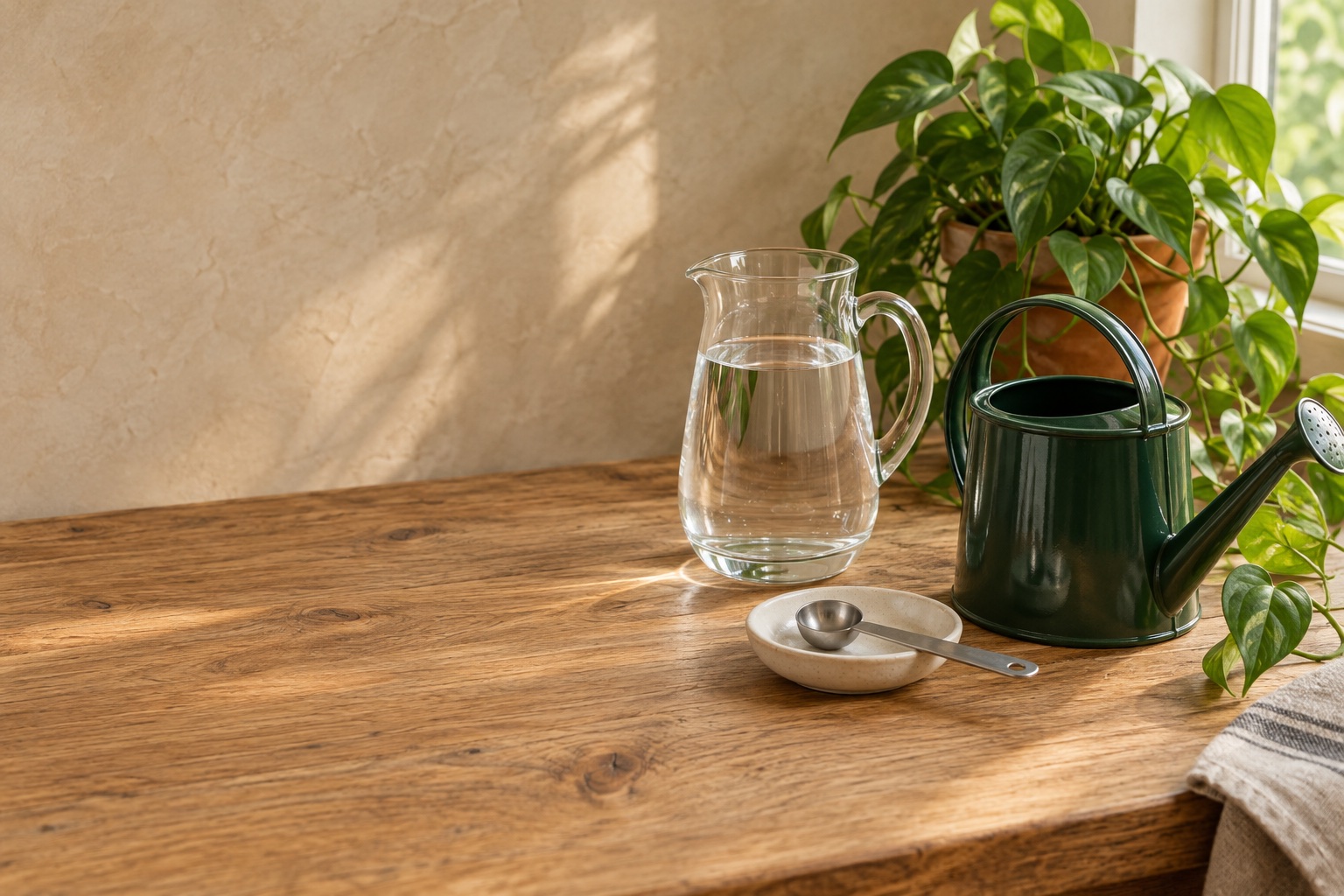
For Noot, mix one teaspoon into half a gallon of water and follow the label. Check your variety in the plant finder, including a plant sold under a loose common name. Use the mixture when appropriate for normal watering; never apply concentrate directly or water an already wet pot just to feed it.
If you use a small can for a shelf plant, measure the water rather than adding the same spoonful you used in a larger container. Keep any fertilizer included in the potting mix in the care record before adding another routine.
Sources: Noot
Track a vine without turning length into a dose
Pick one accessible stem for a repeatable photo. Note the last visible node and take the next picture from the same position. This is a simple way to describe growth while keeping pruning, repositioning and other changes in the record. You do not need to measure every trailing stem.
- Record any pruning date so a shorter vine is not mistaken for decline.
- Note when the basket changes location or orientation.
- Record watering and the measured product used on that occasion.
- Include a whole-pot view so the appearance near the soil is not overlooked.
Avoid a catch-up feeding after a busy week
If you missed a planned care session, begin by inspecting the pot. Do not double a dose to make the calendar look complete. A useful note is “checked today; no watering needed” or “watered today at the usual labeled dilution.” Both describe an action you can understand later.
For a shared household collection, put the date on a tag before returning the basket to its hook. This small handoff helps keep a second person from repeating the same care that afternoon. A visible record is easier to follow than an assumed weekly routine.
Common questions
Should I feed pothos more to keep its variegation?
Do not use a stronger dose to change foliage color. Identify the cultivar and review its light conditions before treating color as a feeding issue.
Can I use the same spoonful in any watering can?
No. Noot’s dose is tied to water volume: one teaspoon per half gallon, following the label.
Sources & further reading
- Epipremnum aureumNorth Carolina Extension Gardener Plant Toolbox
- How to Grow Pothos Indoors (Epipremnum spp.): Care, Cultivars, and Common ProblemsClemson Cooperative Extension
- Noot plant-food directions and product informationNoot