Start here
The short answer
Yellow leaves do not identify a nutrient deficiency on their own. Check the pot, roots, light and recent care before adding fertilizer. Noot belongs in an appropriate watering routine, not an emergency extra dose.
Start with what changed
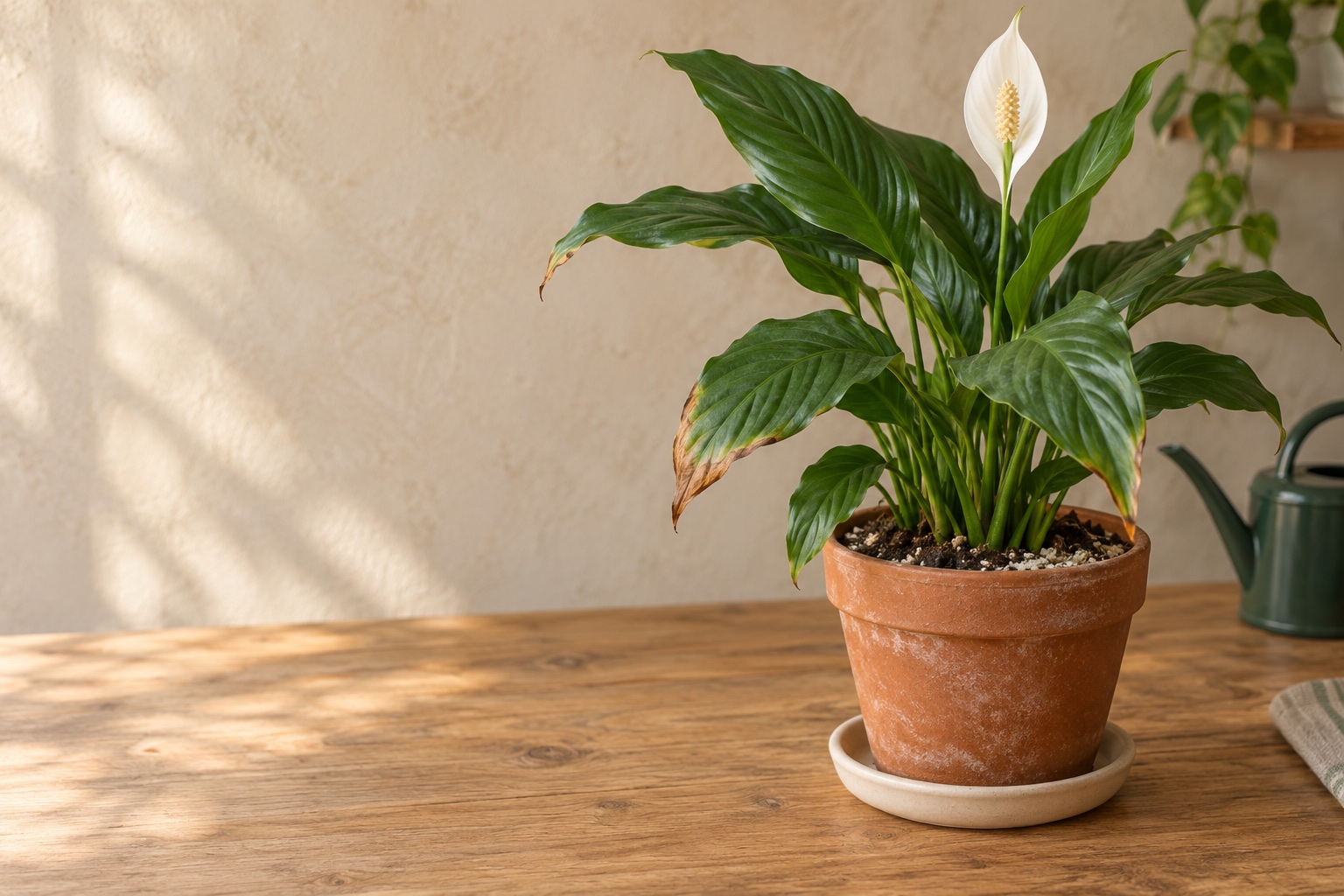
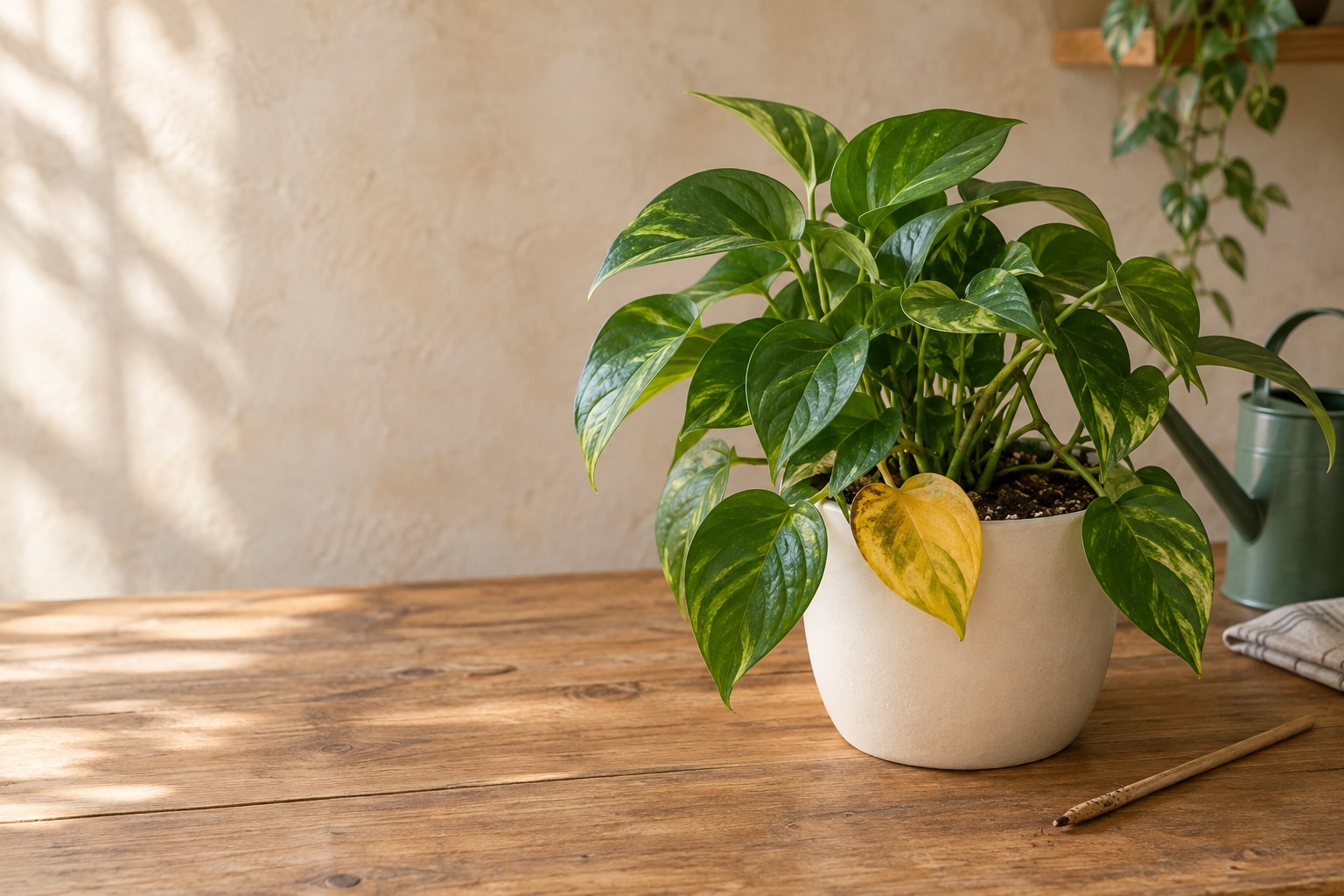
A yellow leaf is a useful observation, but it is not a complete diagnosis. Maryland Extension lists several possible causes of fading or yellowing foliage, including root problems, pests and excessive soluble salts. Missouri Extension also warns that poor light and overwatering can resemble a need for fertilizer. Adding more plant food before checking those possibilities can send you in the wrong direction.
Sources: University of Maryland Extension · University of Missouri Extension
Make a five-minute care record
Before changing the routine, take a whole-plant photo and one close-up. Write down when the yellowing began and whether you moved, repotted or fed the plant shortly beforehand. This gives you a useful starting point if you need help later. Include ordinary details: a new decorative pot or a different watering can may matter more than a guess about a missing nutrient.
- Check moisture inside the pot, not only the appearance of the surface.
- Look for water collecting inside the outer pot or saucer.
- Inspect leaf undersides and stems for insects, webbing or sticky residue.
- Record the plant-food product, measured dose, water volume and last application.
- Note which leaves changed first and whether new growth is also affected.
Use clues to choose the next check
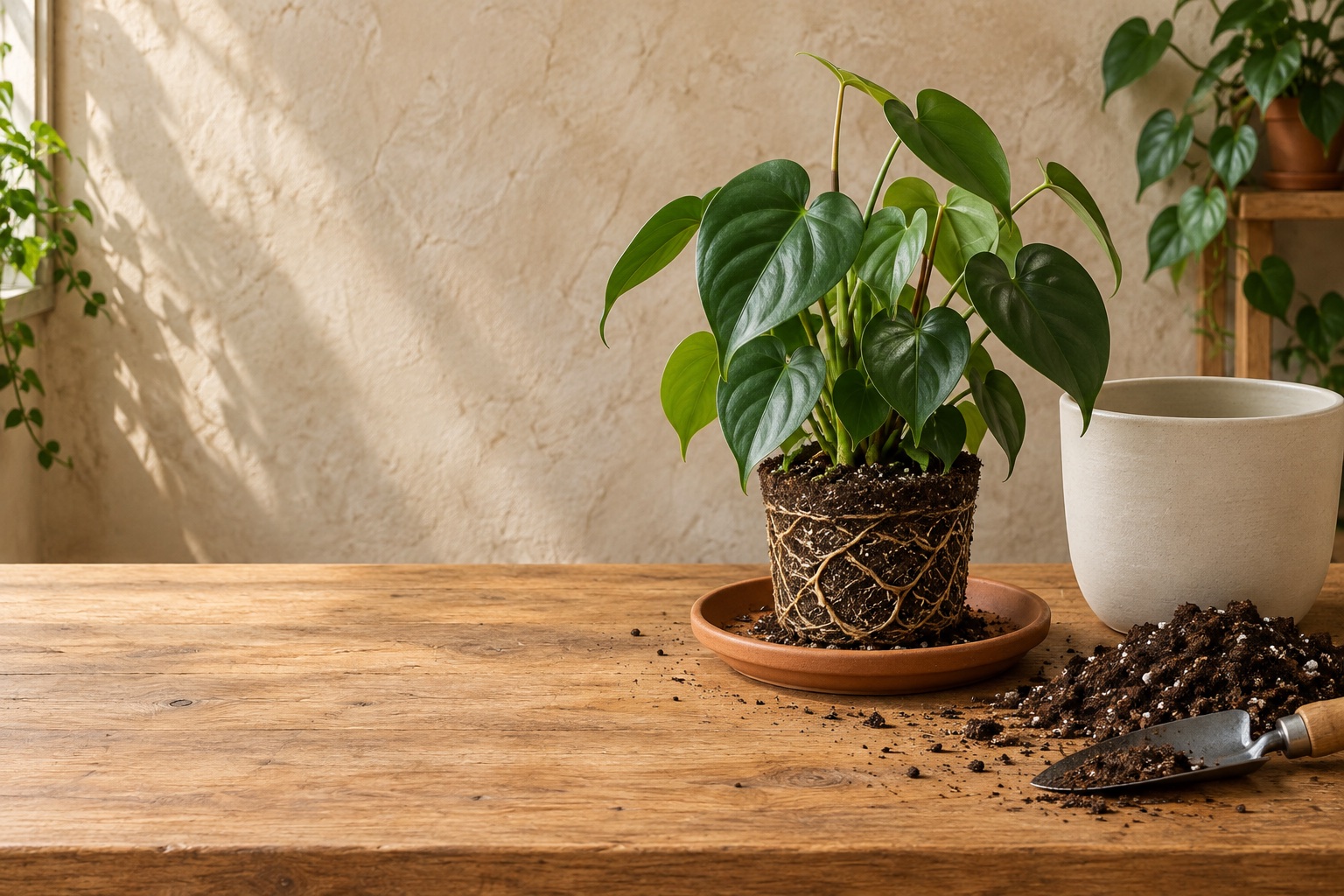
Wilting can accompany both a lack of water and waterlogged roots. Firm, light-colored roots and dark, soft roots are different observations; a yellow leaf alone cannot tell you which is present. If the plant is collapsing, smells unusual or has extensive root damage, get a diagnosis instead of starting a new feeding experiment.
A practical next step is to bring your care record and clear photos to a local extension service or knowledgeable plant professional. Ask what evidence would distinguish the suspected causes. Avoid treating a photograph of one leaf as proof of one specific nutrient shortage.
Sources: University of Maryland Extension
Where Noot fits after the problem is understood
Noot’s directions are one teaspoon in half a gallon of water. Use the diluted mixture during an appropriate normal watering, following the label; never apply concentrate directly. Do not water a wet pot just to give it Noot, and do not increase the concentration because a leaf is yellow.
Noot combines organic inputs, trace minerals and 16 microbial strains. Those product facts do not establish the cause of a symptom or guarantee recovery. Check the plant finder for your variety and return to a feeding routine only when it fits the plant’s condition.
Sources: Noot
Follow the pattern, not one before-and-after photo
At the next care check, use the same camera position and record what you actually see: another leaf changed, no additional leaves changed, a new leaf opened, or the pot remained wet. Keep observations separate from conclusions. “No new yellow leaves this week” is more useful than “the fertilizer fixed it.” If several things changed at once, the record should say so.
Common questions
Should I add more Noot when leaves turn yellow?
No. Keep to the labeled dilution and investigate the cause first; extra concentrate is not a diagnosis or a treatment.
What should I record before asking for help?
Photograph the whole plant and affected leaves, then note watering, drainage, light, repotting and the exact feeding history.
Sources & further reading
- Diagnose Indoor Plant ProblemsUniversity of Maryland Extension
- Caring for HouseplantsUniversity of Missouri Extension
- Noot plant-food directions and product informationNoot