Start here
The short answer
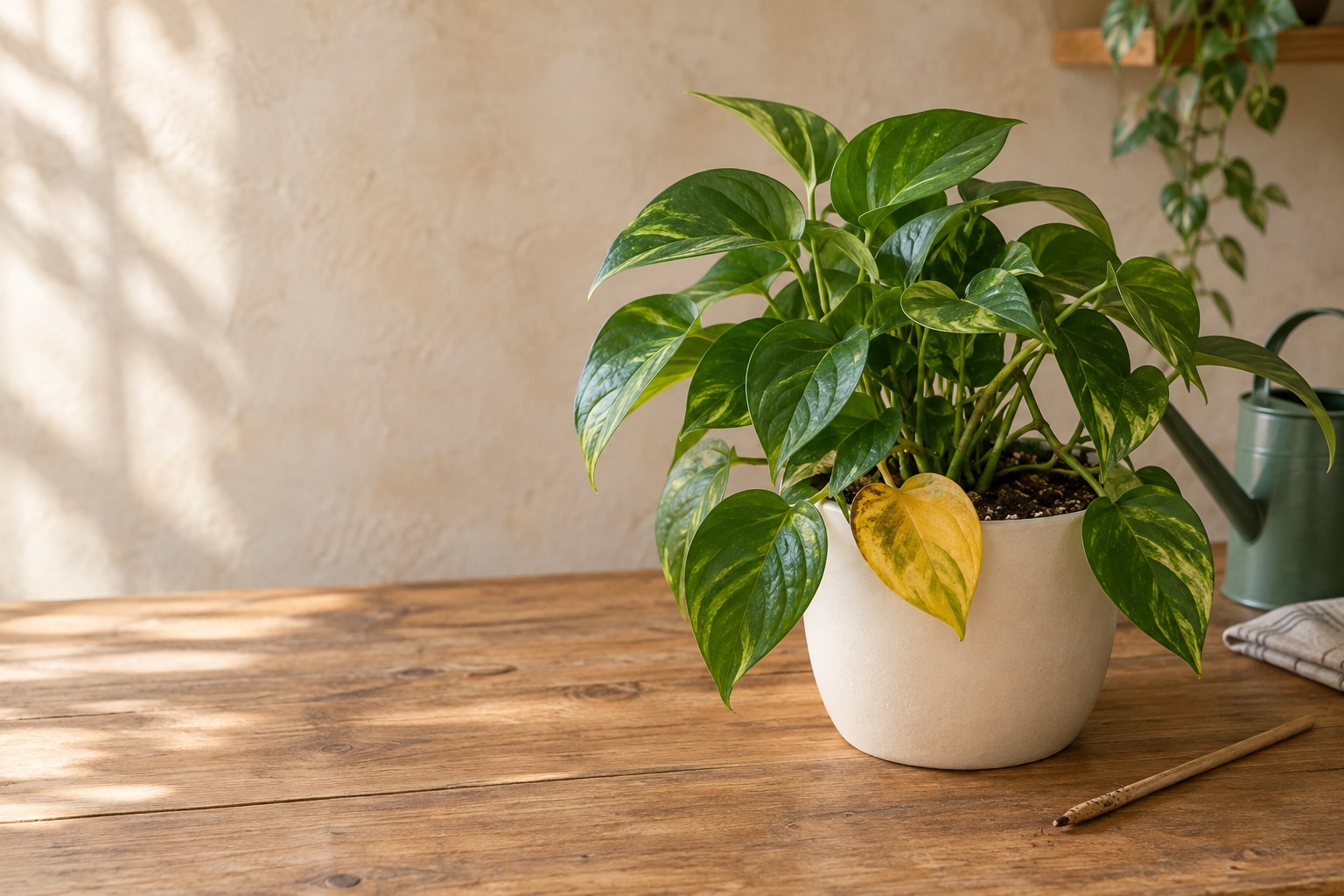
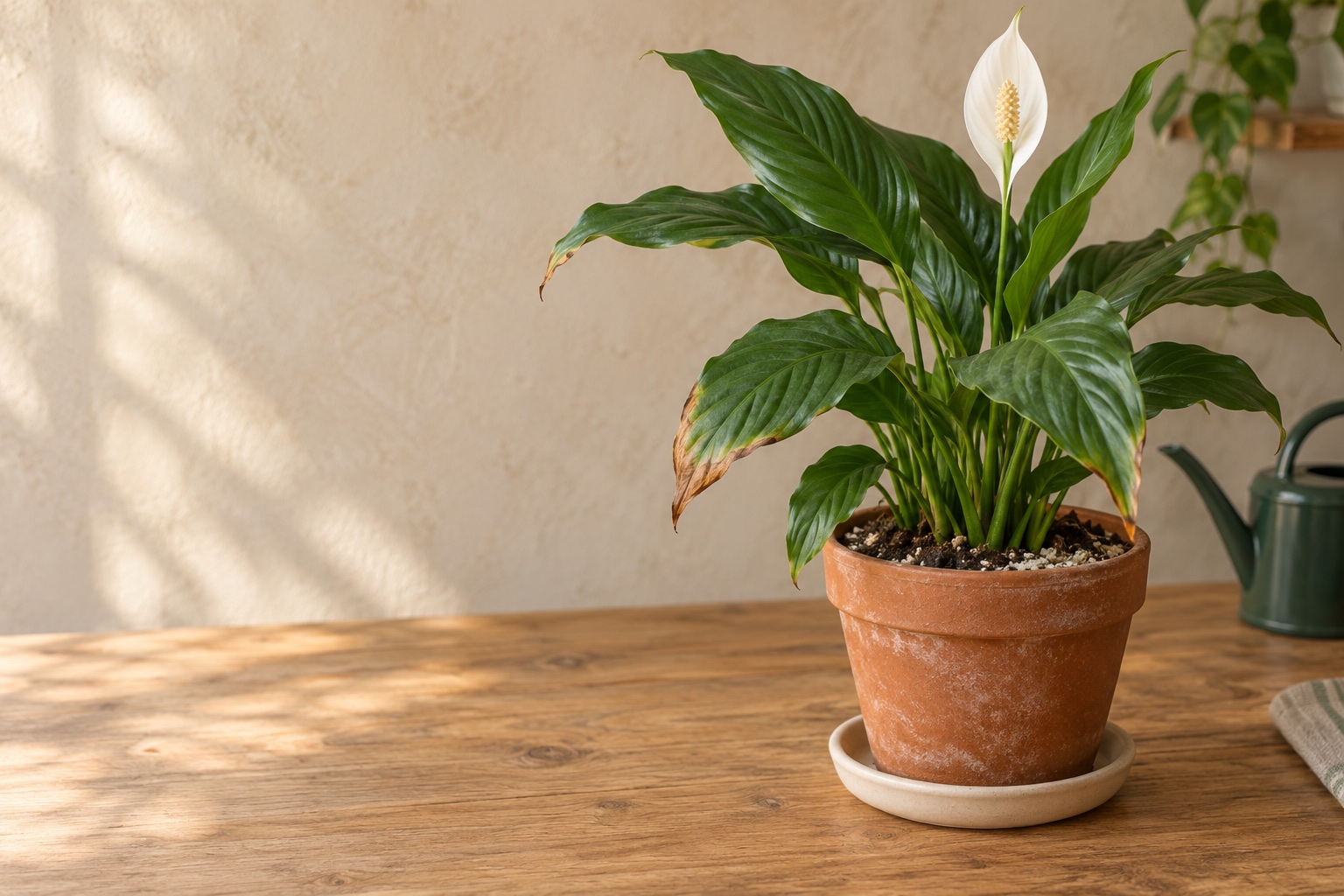
Brown tips, damaged leaf edges, or a crust on the potting surface can prompt a fertilizer check, but they do not establish a diagnosis by themselves. Pause extra feeding, review what was applied, and assess watering and drainage before adding another product.
Understand the possible signs
Excess soluble salts can injure roots and contribute to leaf-tip or edge damage. A whitish deposit on the growing medium or pot rim may accompany salt accumulation. University of Georgia Extension explains how too much fertilizer can interfere with roots taking up water.
These observations should trigger a closer look, not an automatic conclusion. Record where the damage appears and whether it is spreading. A clear photo and a recent-care history are more useful than one isolated leaf.
Reconstruct what the plant received
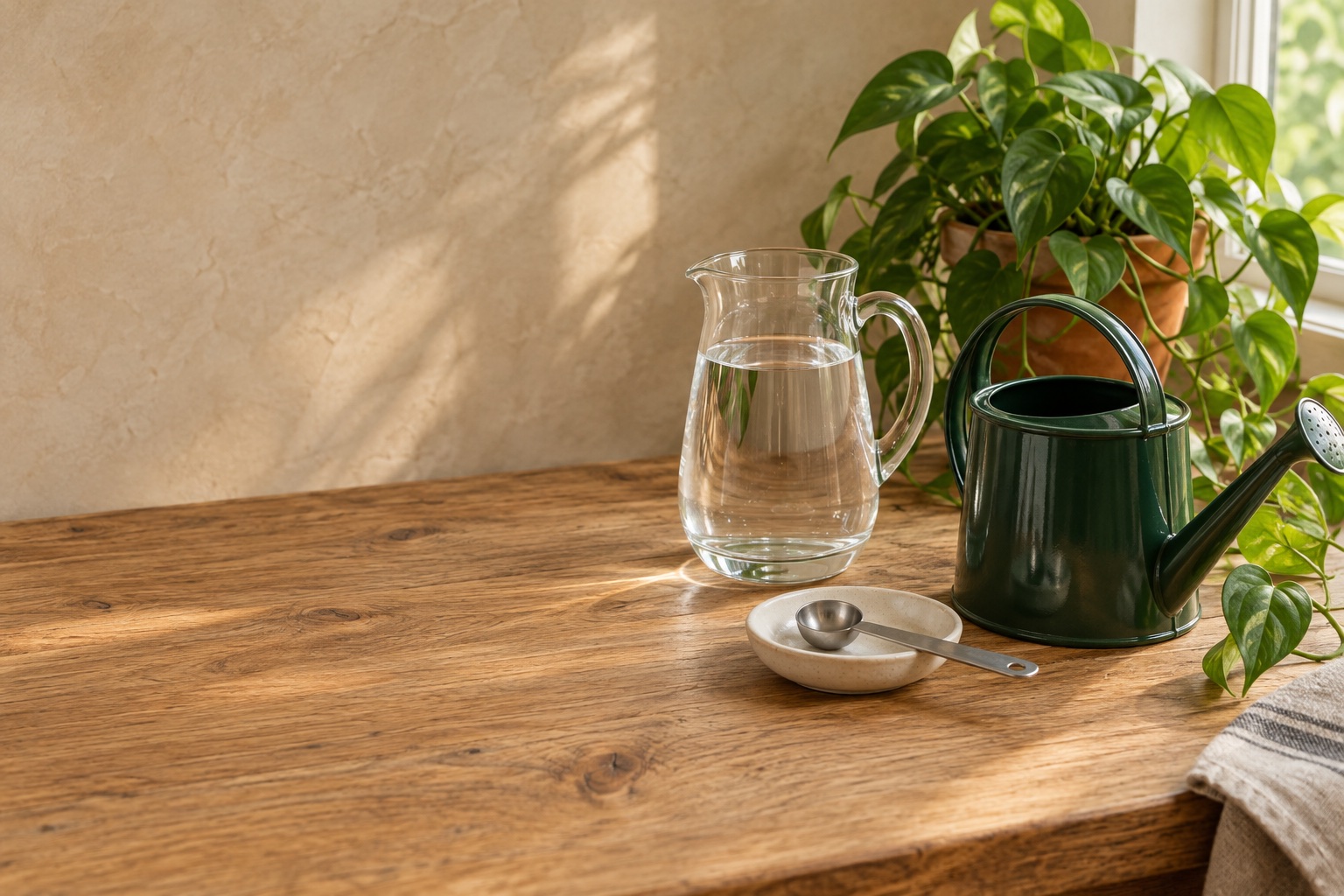
Set out the products you used and read their labels. Include anything added during repotting. Check the measuring tool as well as the product: confusing teaspoons with tablespoons can change a batch considerably.
- Write down product names and application dates.
- Record the water volume and product amount you actually used.
- Check whether more than one person has been feeding the plant.
- Note repotting, a new location, or a changed watering routine.
Respond to the cause, not just the leaf
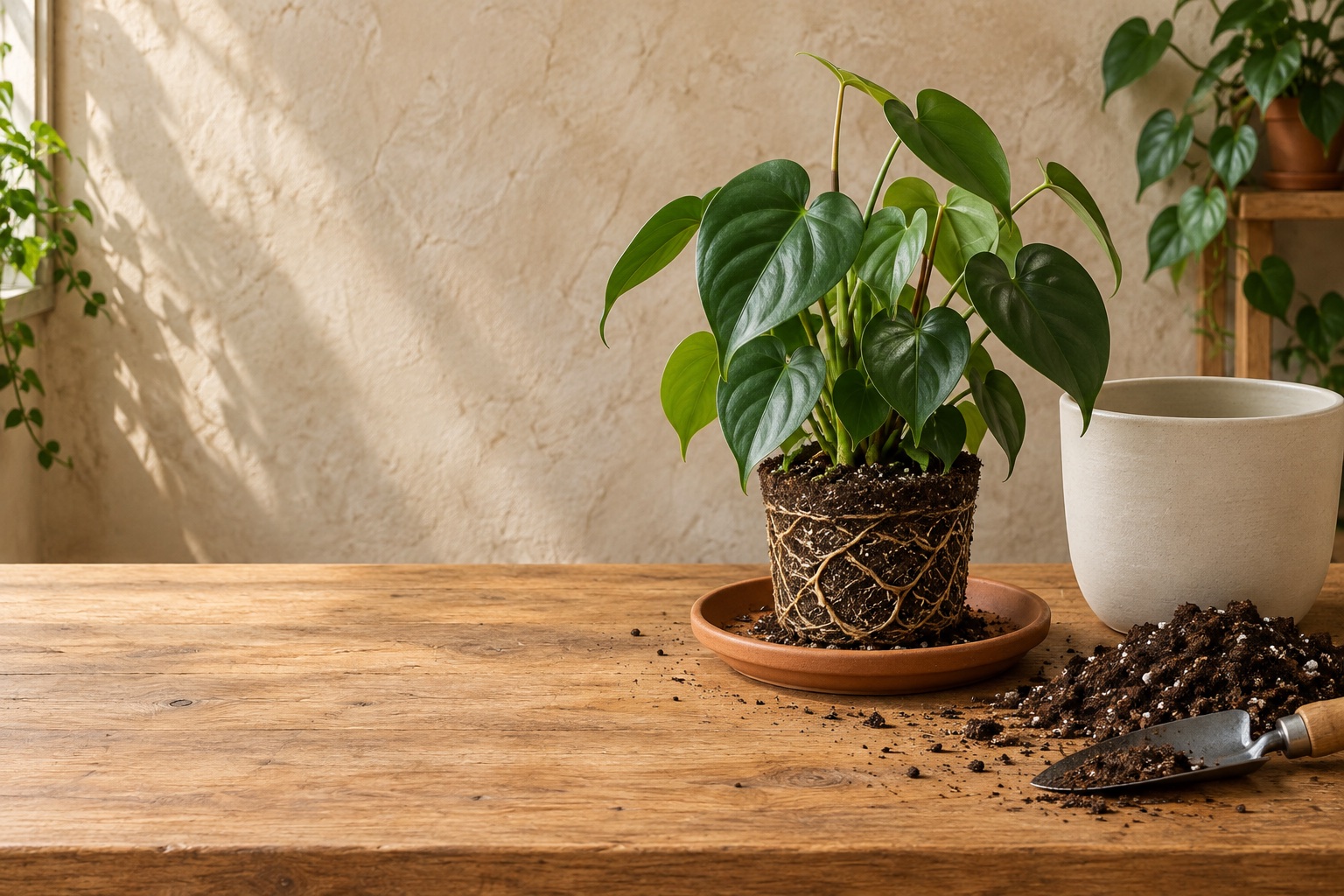
Stop adding extra fertilizer while you work out what happened. If excess fertilizer salts are the problem and the container drains freely, leaching with plain water can remove salts; University of Georgia discusses this approach. A waterlogged pot or suspected root problem needs a different assessment, so do not repeatedly flood it as a catch-all fix.
For persistent decline, share the plant identity, photographs, pot details, product labels, and care history with a local Extension service or a qualified plant-care professional.
Do not use Noot as an emergency dose
Noot’s directions are one teaspoon in half a gallon of water, used during normal watering and according to the label. Never pour the concentrate directly into a pot. The product information does not promise to reverse fertilizer injury or make every stressed plant recover.
If Noot is part of the routine, include it in your care record along with other products. The words organic inputs and the presence of microbes are not a reason to disregard dilution or add a second dose.
Sources: Noot
Make a repeat error less likely
Write the mixing ratio next to the marked container and keep a dedicated measuring tool with the product. Use a simple “mixed” note if someone else helps with watering. Label a care log with actual dates instead of a recurring instruction that might be followed twice.
After addressing the suspected cause, document what changes and what does not. Avoid introducing several new products together, because that makes the next observation harder to interpret. Resume a normal routine only when appropriate for the plant and product directions.
Common questions
Does every brown leaf tip mean fertilizer burn?
No. Treat it as a clue and review the plant’s conditions and recent care before deciding on a cause.
Should I give extra Noot to help a stressed plant?
Do not increase the dose as a rescue treatment. Follow the label and identify the cause of stress first.
Sources & further reading
- Growing Indoor Plants with SuccessUniversity of Georgia Cooperative Extension
- Noot plant-food directions and product informationNoot