Start here
The short answer
For Monstera, pair an appropriate plant-food routine with suitable light, drainage and room to grow. Leaf size and splits are not a fertilizer dose gauge. Measure Noot according to its label and water for the plant’s needs.
Start with the right Monstera
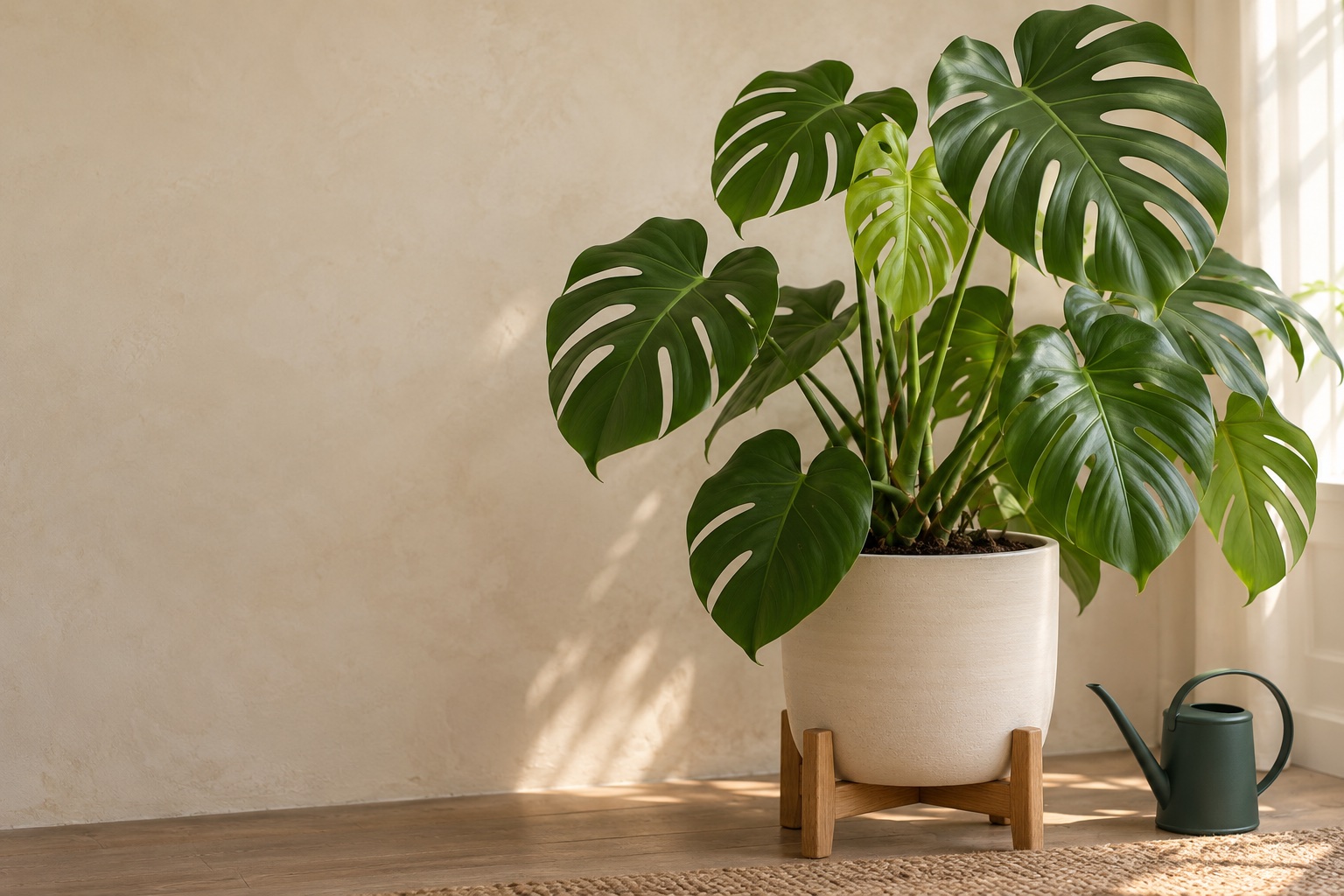
This guide focuses on established, container-grown Monstera deliciosa. Minnesota Extension explains that young leaves may lack the openings seen on mature plants and that variegated forms can grow more slowly because portions of their leaves have less chlorophyll. A smaller or unsplit new leaf therefore does not, by itself, tell you to add more fertilizer.
Keep the plant name with the care record, especially if your collection also includes other plants sold under “split-leaf” names. Do not assume that a familiar common name identifies an identical plant.
Sources: University of Minnesota Extension
Give the plant a workable growing setup
Wisconsin Extension recommends a well-draining soilless mix, support for climbing growth, and watering that allows the medium to dry somewhat between applications. Its Monstera guidance also places regular fertilizing in the spring-to-fall growing period. These are connected parts of care, rather than a reason to increase food whenever growth slows.
Check that a large decorative planter actually allows you to inspect and empty drainage water. Also check that the support is stable before moving the plant for watering; the practical handling of a large Monstera deserves its own plan.
Measure Noot by water volume
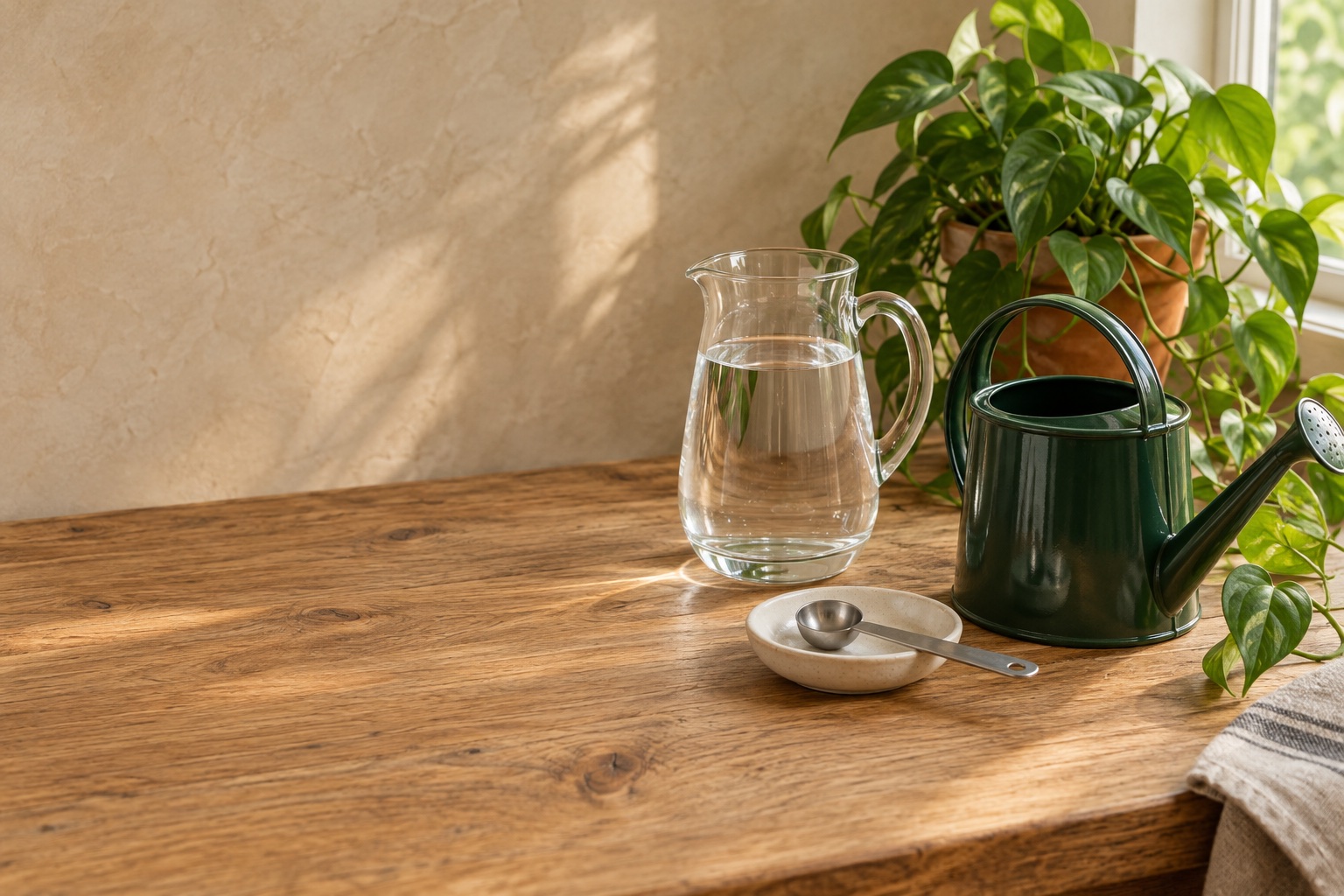
Use Noot at one teaspoon in half a gallon of water, following the current label. Check your variety in the plant finder and use the diluted mixture during appropriate normal watering. A large leaf does not call for a stronger mixture, and concentrate should never be poured directly onto roots or the growing medium.
For a larger watering container, measure the actual water volume and scale the same ratio. Do not assume a can’s advertised capacity equals the amount you filled. Stop adding water when the plant’s watering needs are met; there is no need to finish the can in one pot.
Sources: Noot
Use a new-leaf record that is easy to repeat
Instead of judging the whole plant against an online before-and-after photo, choose one repeatable view. Include the pot, support and window side in the first photo. Then record each new leaf when it has opened, along with anything else you changed. This keeps the comparison connected to your own setup.
- Note the date a new leaf opened, without predicting the next one.
- Record a move, new grow light, repot or support change.
- Keep the exact plant-food dilution and watering date together.
- Distinguish a damaged older leaf from a problem appearing on new growth.
A larger plant can need a better record, not a stronger mix
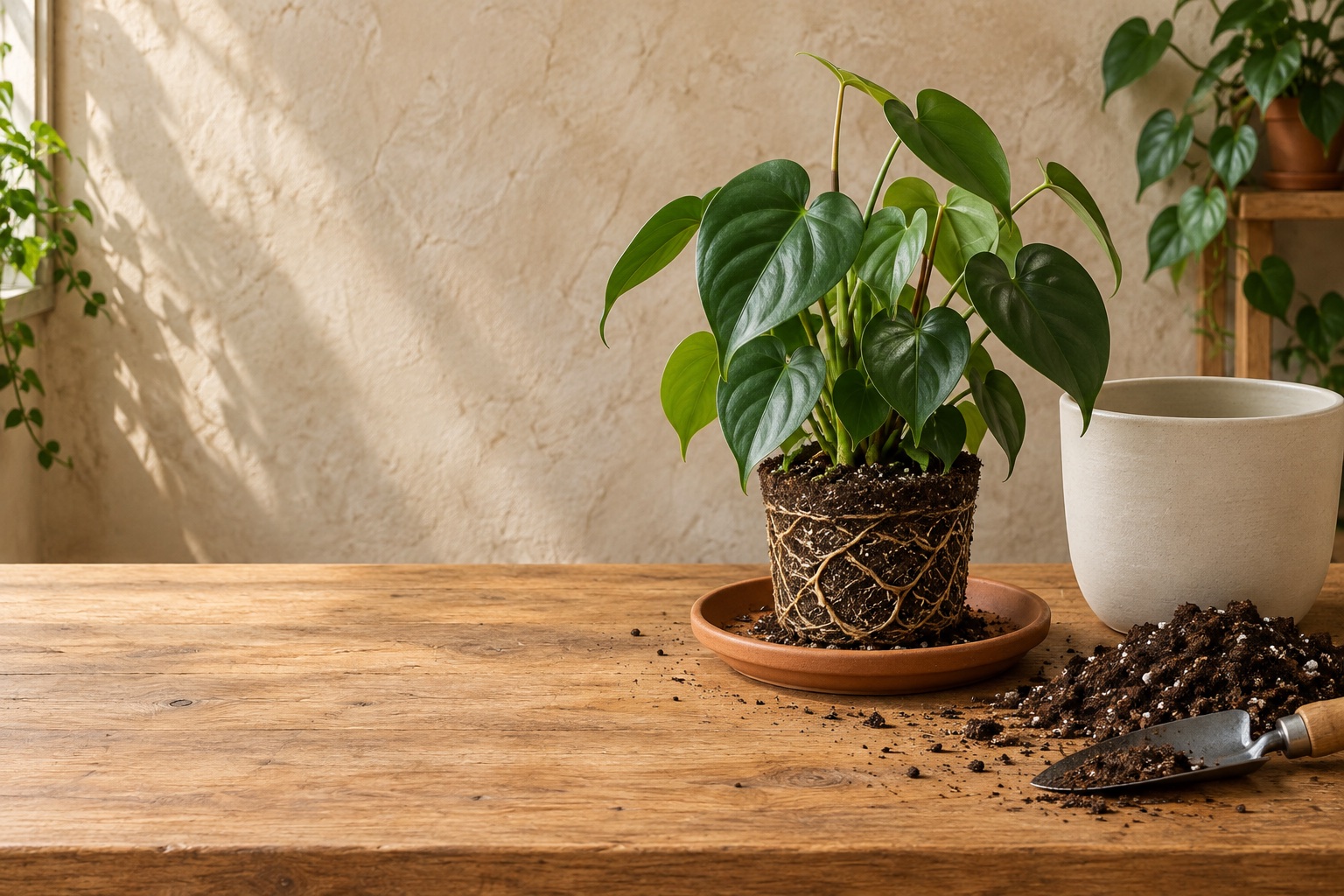
Suppose you have moved a Monstera from a nursery pot into a decorative outer planter. Before the next feeding, write down how you will check the inner pot and collect runoff. If the arrangement hides the drain hole, solve that access problem first. Increasing plant food cannot make the setup easier to inspect.
Keep the current routine simple enough to describe in one sentence: the plant, the mix, the measured product and the watering check. If growth disappoints you, review that full picture before changing the dose.
Common questions
Will extra fertilizer make a Monstera leaf develop splits?
Leaf development depends on factors including maturity and growing conditions. A stronger Noot solution is not a method for forcing splits.
Does a bigger Monstera need stronger Noot?
Use the labeled concentration. Measure the water volume and meet the plant’s watering needs rather than increasing concentration because the leaves are larger.
Sources & further reading
- Monstera deliciosaUniversity of Minnesota Extension
- Swiss-Cheese Plant, Monstera deliciosaUniversity of Wisconsin–Madison Extension
- Noot plant-food directions and product informationNoot