Start here
The short answer
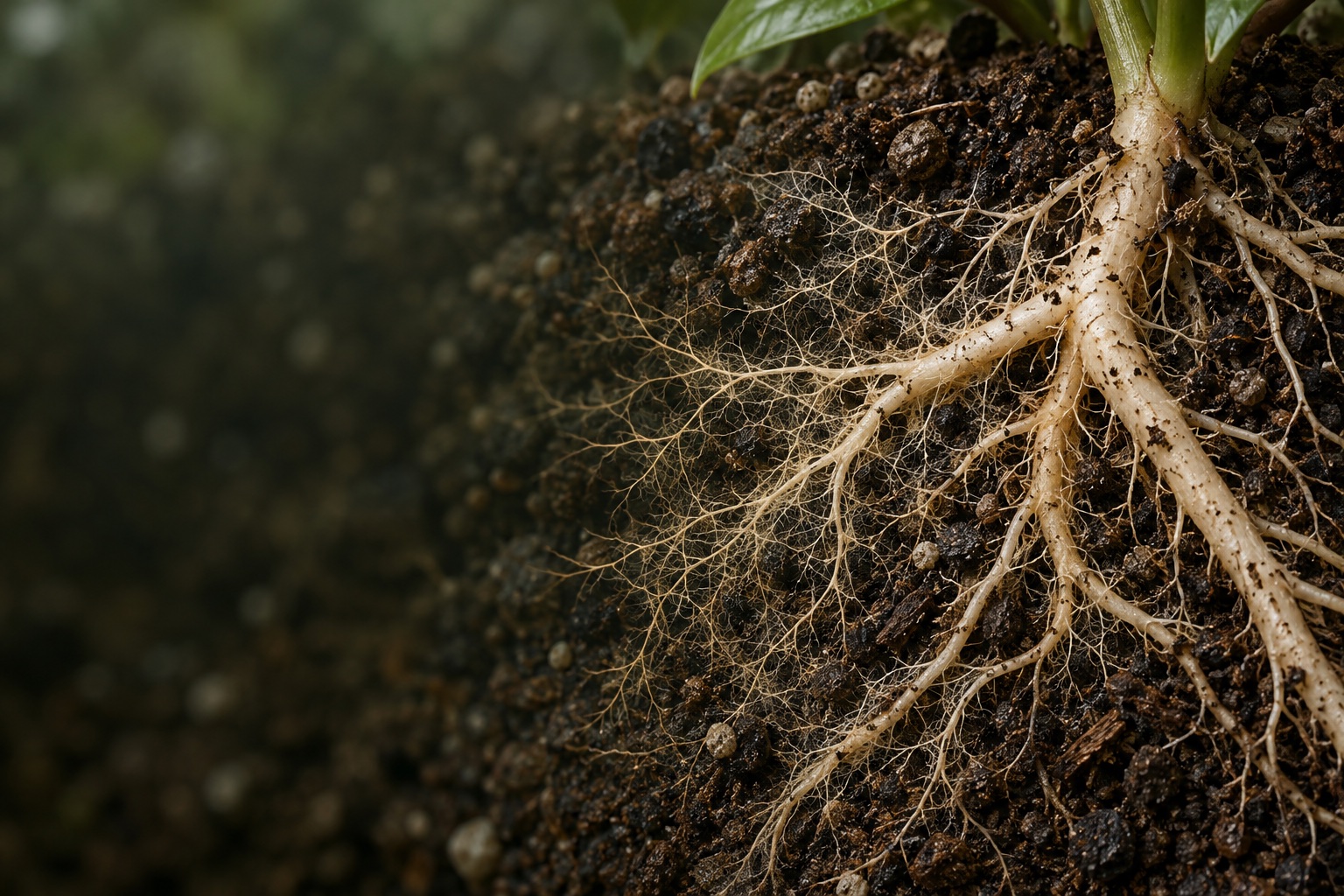
Mycorrhizal fungi form partnerships with compatible living roots. The plant supplies carbon, and fungal threads can help it access nutrients and water. That biology explains a possible relationship, not a guaranteed result from every inoculant or houseplant.
A partnership between a root and a fungus
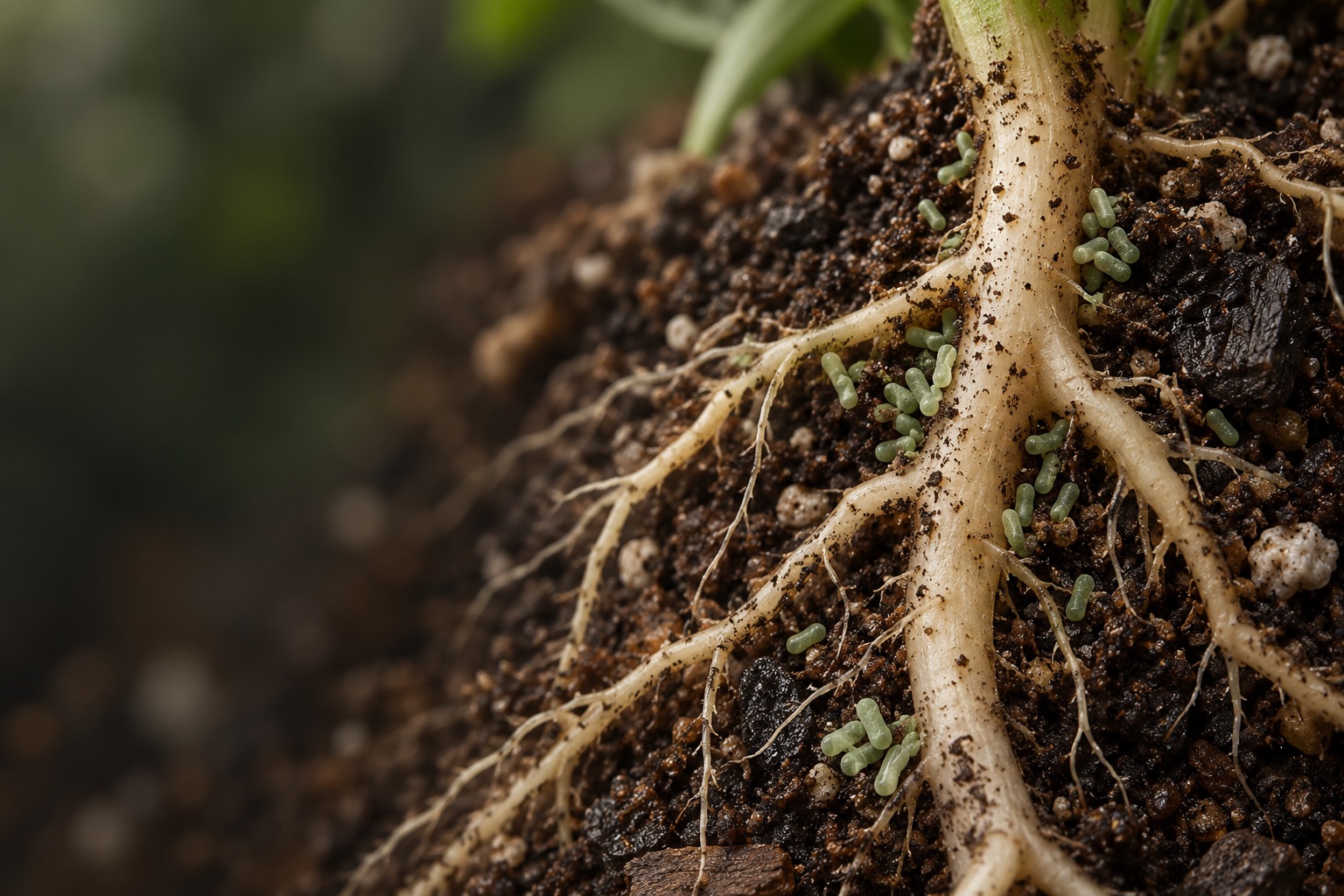
Mycorrhiza describes a root–fungus association. Colorado State explains that fungal threads can extend beyond roots while receiving sugars and other compounds from the plant. It is a two-way biological relationship, not a packet of nutrients that works independently of the plant. Fungi and bacteria are different groups; a microbial formula can include both.
Sources: Colorado State University Extension
Why the setting changes the outcome
Penn State describes the importance of living host plants and notes that high phosphorus levels can reduce mycorrhizal associations. Its field-soil guidance also says inoculation is often unnecessary where suitable fungi are already present. A houseplant in a manufactured potting mix is a different setting, so a landscape result cannot simply be assigned to your indoor pot.
Before interpreting a claim, look for the plant species, growing medium, existing fertility and measured outcome. If those details are missing, you do not have enough information to translate a study into a promise for your own plant.
Sources: Penn State Extension
What Noot’s six fungal strains tell you
Noot Bio-Organic Plant Food combines organic inputs, trace minerals and 16 microbial strains: six mycorrhizal fungi and ten rhizobacteria. That is a description of the formula. A strain count by itself does not tell you whether a particular plant’s roots have been colonized or how much its growth will change.
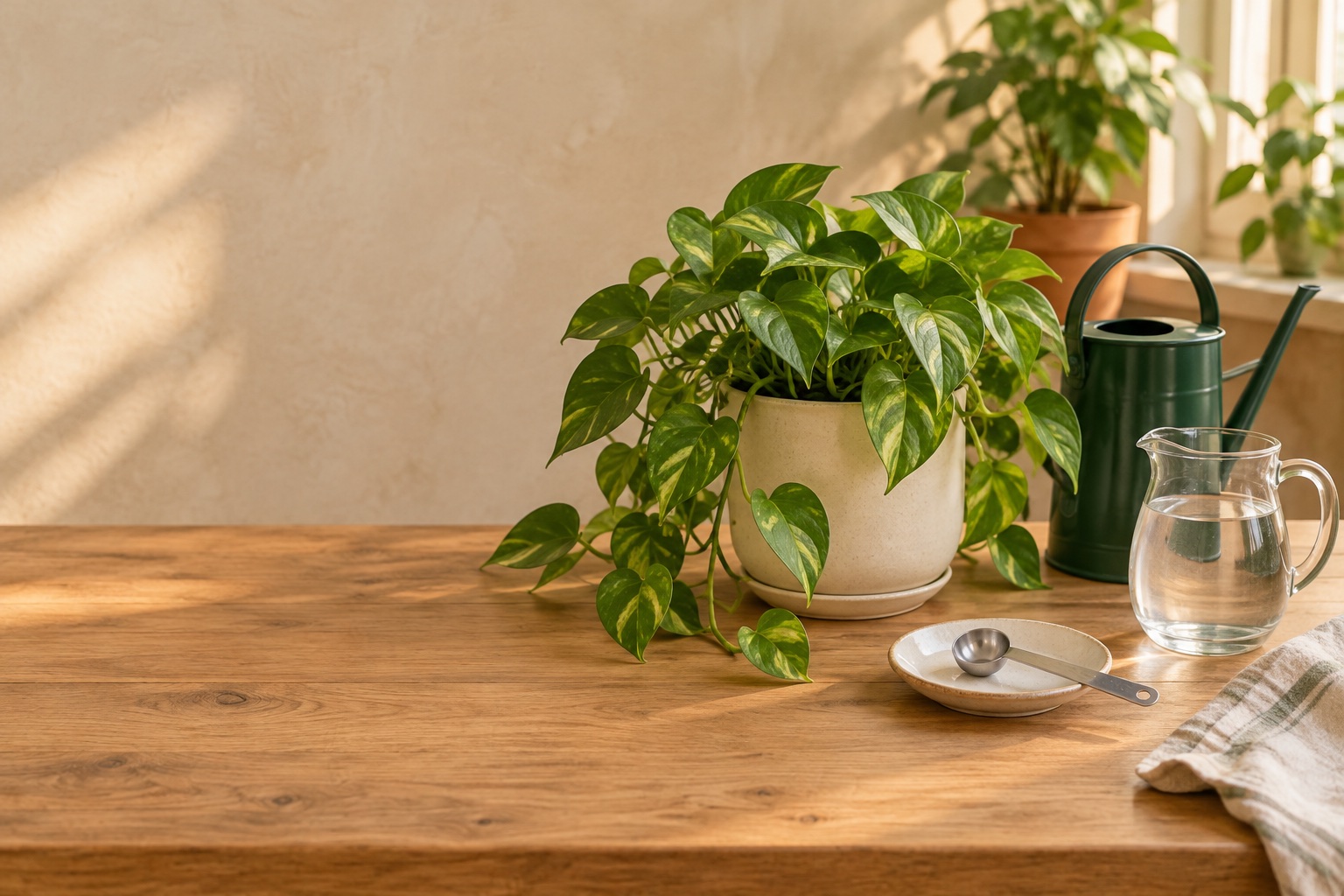
For use, check your variety in the plant finder and follow the label. Mix one teaspoon into half a gallon of water for an appropriate normal watering. Do not increase the dose to try to establish a partnership faster.
Sources: Noot
Read a microbial claim with four questions
When comparing a diagram, product page or research summary, pause at the point where it moves from a general mechanism to a product outcome. A clear explanation should make that transition visible. You can use the following questions when asking a seller for more information.
- Which plant and growing medium were actually studied?
- Was the outcome a laboratory observation, root colonization measurement or visible plant response?
- Was the named product tested, or only a different organism or formula?
- Were there comparison plants and enough detail to judge other changes in care?
Observe your plant without claiming a laboratory result
Keep ordinary care notes: plant identity, product amount, mix, watering date and photos in the same light. Those notes can help you maintain a consistent routine. They cannot prove which organism caused a new leaf or verify what is happening inside roots.
For example, a plant moved closer to a window and given Noot during the same month has more than one changed condition. Record both. Enjoy new growth if it arrives, but describe it as an observation. Noot’s 30-day journey is an illustration of care, not a guaranteed schedule or a controlled comparison.
Sources: Noot
Common questions
Does more fungi always mean more growth?
No. A count does not establish compatibility, colonization or a growth outcome. Plant and growing conditions matter.
Can I see mycorrhizae working in a normal plant photo?
A leaf photo records appearance, not a measurement of root colonization or proof of a particular microbial effect.
Sources & further reading
- The Living SoilColorado State University Extension
- Managing Soil Health: Concepts and PracticesPenn State Extension
- Noot plant-food directions and product informationNoot