Start here
The short answer
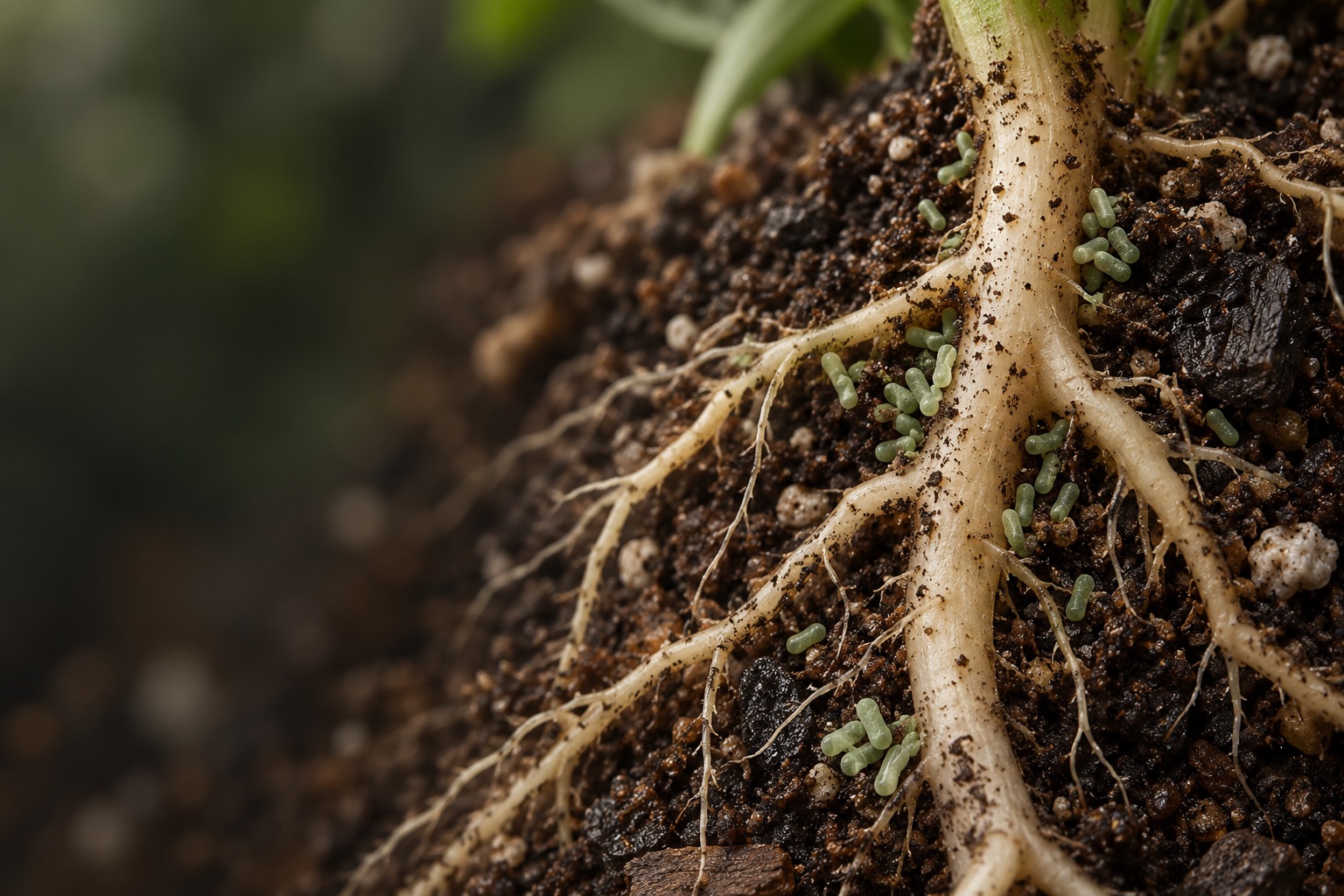
Some bacteria near roots participate in nutrient cycling and other plant–soil interactions. Their effects depend on the organism and environment. Noot contains ten rhizobacterial strains, but the number alone is not evidence of a particular result.
What is the rhizosphere?
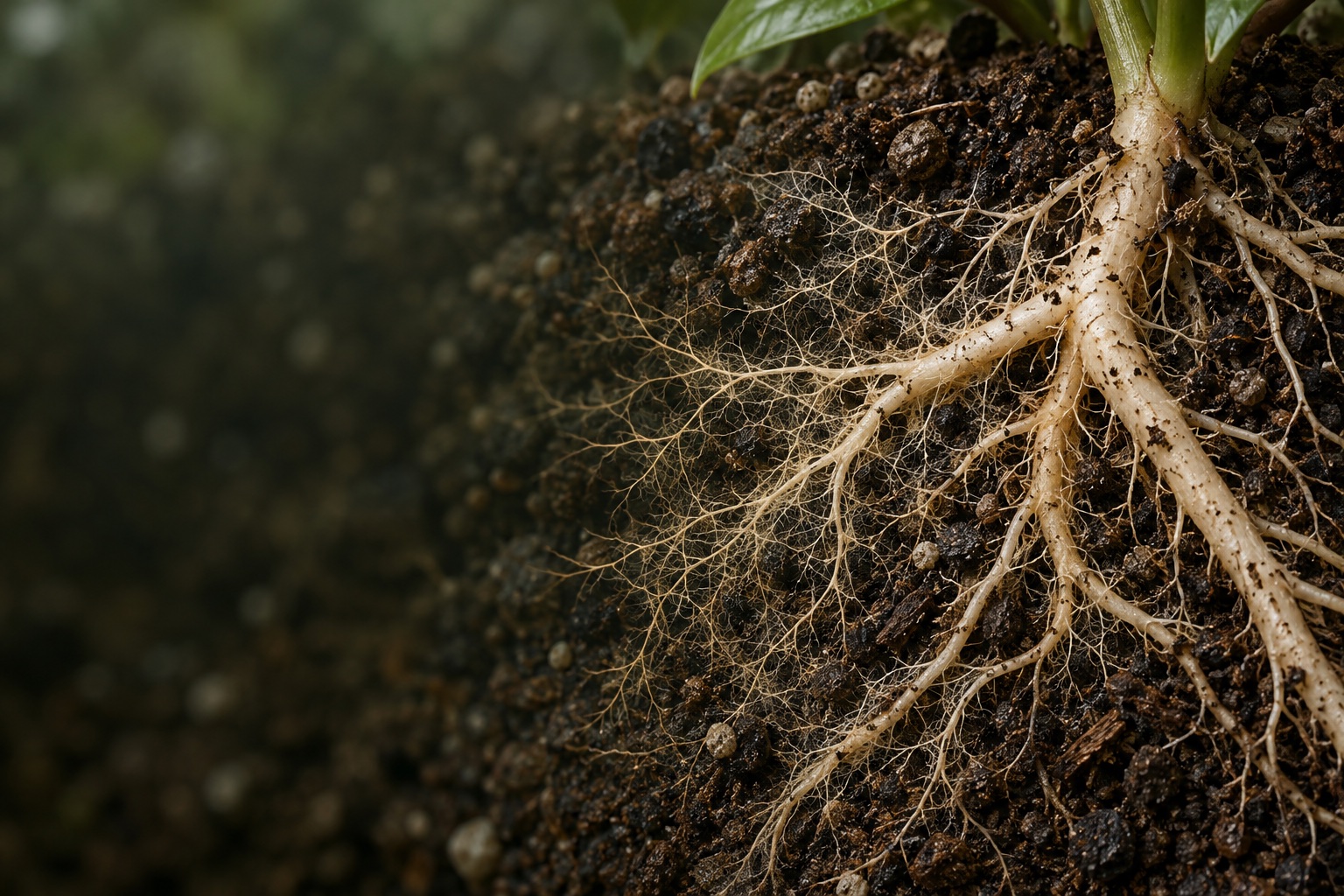
The rhizosphere is the soil region influenced by roots. Penn State describes it as an area with especially active microbial communities, supported by materials associated with roots and organic matter. Bacteria are one part of that community, alongside fungi and other organisms. “Microbe” is a broad term, while “bacterium” refers to a particular kind of microorganism.
Some microbes help cycle nutrients or break down organic material; others can compete with plants or cause disease. A claim about beneficial bacteria should therefore identify a useful function in a particular setting, rather than label every microorganism helpful.
Sources: Penn State Extension
Bacteria do not replace the growing conditions
Colorado State distinguishes different bacterial roles and encourages care for existing soil communities. Its garden guidance cautions that purchased organisms are not automatically needed in an established soil. That is a useful reminder to ask what a product adds in your actual growing setup, rather than treating the presence of microbes as a complete care plan.
For a houseplant, keep the practical questions visible: What plant is it? What medium is it growing in? What products are already being used? A description of soil biology does not answer those questions for you.
Sources: Colorado State University Extension
What is in Noot?
Noot’s product information lists ten rhizobacteria strains and six mycorrhizal fungal strains, alongside organic inputs and trace minerals. The fungi are not bacteria, and the 16-strain total is not a performance score. Do not infer a specific disease-control, nitrogen-fixation or growth-rate claim from the count.
Use the current label and plant finder to check your variety. For normal use, mix one teaspoon of Noot into half a gallon of water. Apply diluted Noot during appropriate watering; never use concentrate directly or water simply because you want to add microbes.
Sources: Noot
Ask useful questions about microbial products
A helpful comparison starts with information you can check, not how dramatic the root illustration looks. Keep a short list beside the product labels so the same questions are asked of each formula. If a detail is absent, write “not provided” instead of filling it in from a different product.
- Is the claim about the actual formula or general microbial biology?
- Does the evidence describe the same plant and growing medium?
- Are application, storage and product-use instructions clearly available?
- Is the reported result measured, and is the comparison explained?
Keep a routine you can describe accurately
For your own notes, record the exact product, measured dilution, plant, watering date and anything else that changed. An entry such as “one measured Noot watering; plant stayed in the same place” is understandable later. “Added good bacteria” leaves out nearly everything needed to reconstruct the care.
Use photos as a record of appearance, not a count of bacteria. If you share a progress update, state the interval and other changes honestly. You can describe your experience without claiming that a home photo proves a microbial mechanism or guarantees someone else the same result.
Common questions
Are fungi and bacteria the same thing?
No. Both can be described as microbes, but they are different groups. Noot’s formula lists six fungal and ten bacterial strains.
Should I use extra Noot to add more bacteria?
No. Follow the labeled dilution and the plant’s normal watering needs. The microbial count is not a reason to increase concentration.
Sources & further reading
- Understanding and Managing Soil MicrobesPenn State Extension
- The Living SoilColorado State University Extension
- Noot plant-food directions and product informationNoot