Start here
The short answer
Choose organic plant food by its intended use, ingredient information, and directions. An organic-input description is not the same as an independent certification. Noot Bio-Organic Plant Food combines organic inputs, trace minerals, and 16 microbial strains; use its current label for application guidance.
What organic describes
Organic plant foods commonly draw nutrients from naturally derived materials such as plant meals, fish products, or manure. A blend may combine several sources. Ingredient origin and approval for a certified growing program are separate questions; read the information for the exact product.
Organic sources still need thoughtful application. University of Minnesota Extension notes that nutrient release differs among products and excessive organic fertilizer can also create problems. A garden amendment, potting mix, and houseplant concentrate are not interchangeable because each uses the word organic.
Sources: University of Minnesota Extension · University of New Hampshire Extension
Use a four-part label check
Take a photograph of the front and directions panels together. If you later compare products, you will have the actual instructions instead of a shopping screenshot that shows only the product name.
- Identify the intended plants and growing situation.
- Find preparation and application instructions.
- Separate ingredient descriptions from any documented certification claim.
- Check the exact product and current packaging when an online listing differs.
Where Noot fits
Noot’s public product information describes organic inputs, trace minerals, six mycorrhizal fungi strains, and ten rhizobacteria strains. Those fungi and bacteria are different groups of microbes. Their inclusion does not promise that every plant will respond in the same way.
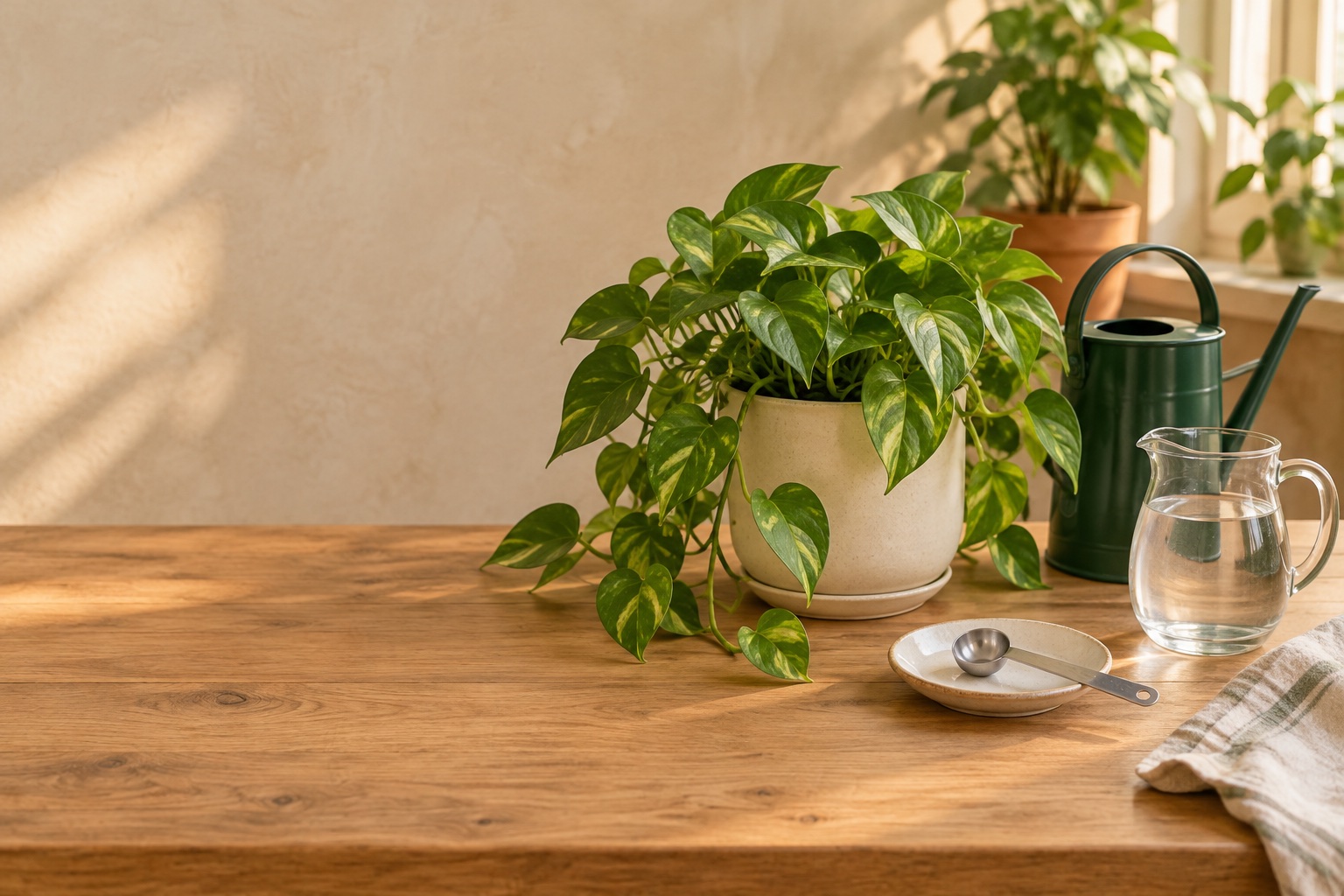
Use Noot at one teaspoon per half gallon of water. One vial makes approximately 3.5 gallons at that ratio. Plan your supply around how much prepared solution you actually use, rather than assuming that every vial represents a fixed number of weeks.
Sources: Noot
Compare a routine, not a slogan
Imagine comparing two concentrates online. One listing highlights organic ingredients; the other highlights a large bottle. Before deciding, write down each dilution and prepared yield, whether the directions cover your plants, and what else you already apply.
You may discover that the useful difference is measuring convenience or compatibility with your current routine. Keep unanswered questions visible. A missing detail is a reason to check the label or ask the supplier, not an invitation to assume the strongest possible claim.
Resolve the questions that matter to you
If a certification matters for your intended use, look for documentation that identifies the exact product. If measuring convenience matters, compare the dilution with the container you already use. If you have an unusual growing setup, confirm that the directions cover it before buying.
With Noot, follow the label during your normal watering routine and never apply the concentrate directly. Check the plant finder for suitability. Choose a routine you can apply accurately; the word organic does not remove the need to measure or check your plant.
Sources: Noot
Common questions
Does organic plant food need to be measured?
Yes. Follow the specific product’s preparation and application directions; the word organic does not supply a dose.
Does organic mean certified organic?
An organic-input description and independent certification are different claims. Check documentation for the exact product if certification matters to your use. Noot’s product description here does not claim independent organic certification.
Sources & further reading
- Soil testing for lawns and gardensUniversity of Minnesota Extension
- Using Fertilizers and Potting Soil to Grow PlantsUniversity of New Hampshire Extension
- Noot plant-food directions and product informationNoot