Start here
The short answer
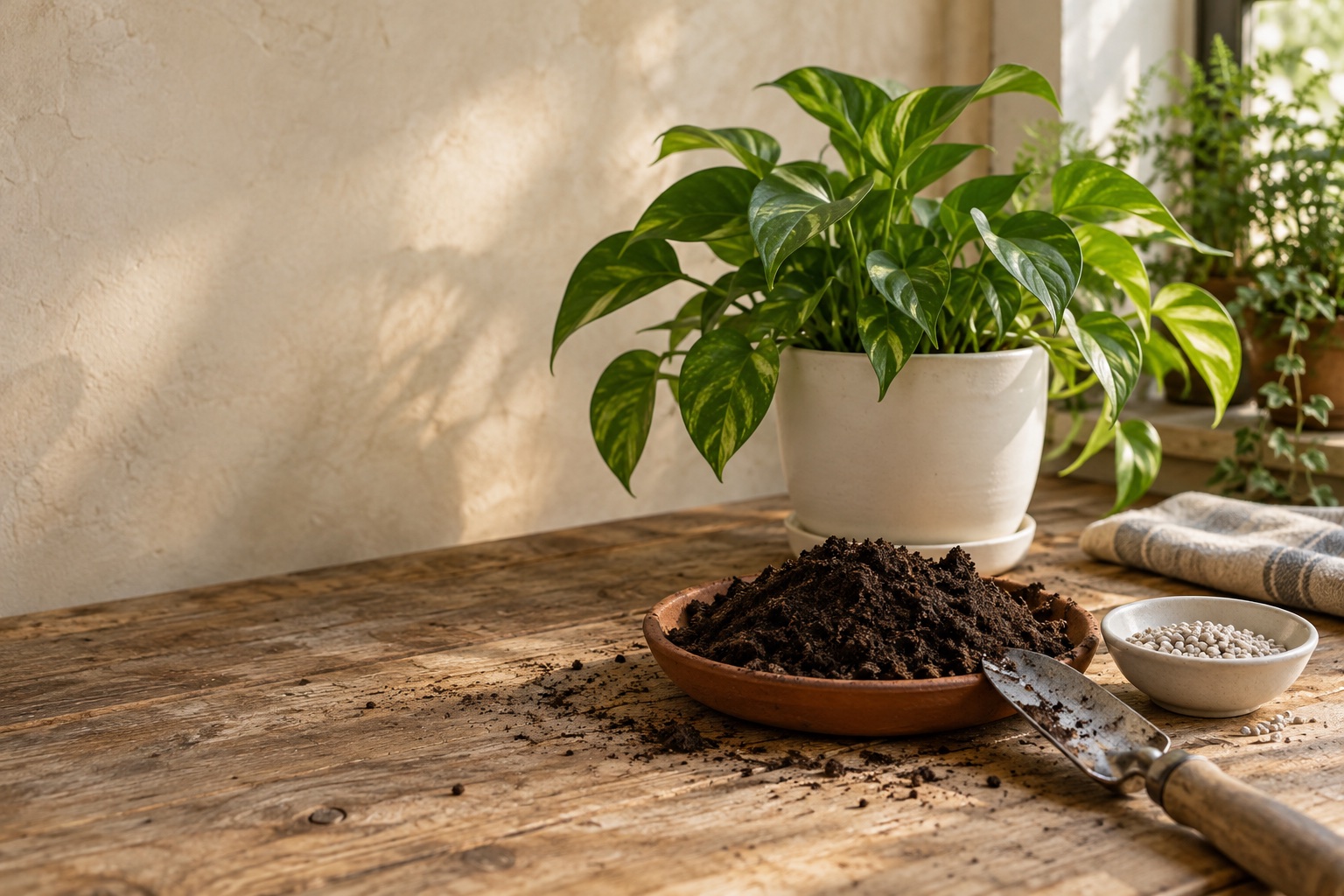
Compost contributes organic matter and some nutrients; fertilizer supplies nutrients according to its formulation. They can overlap, but they are not interchangeable instructions. For a houseplant, start with the contents of the potting mix and the needs of the plant.
Compare the job, not just the label on the bag
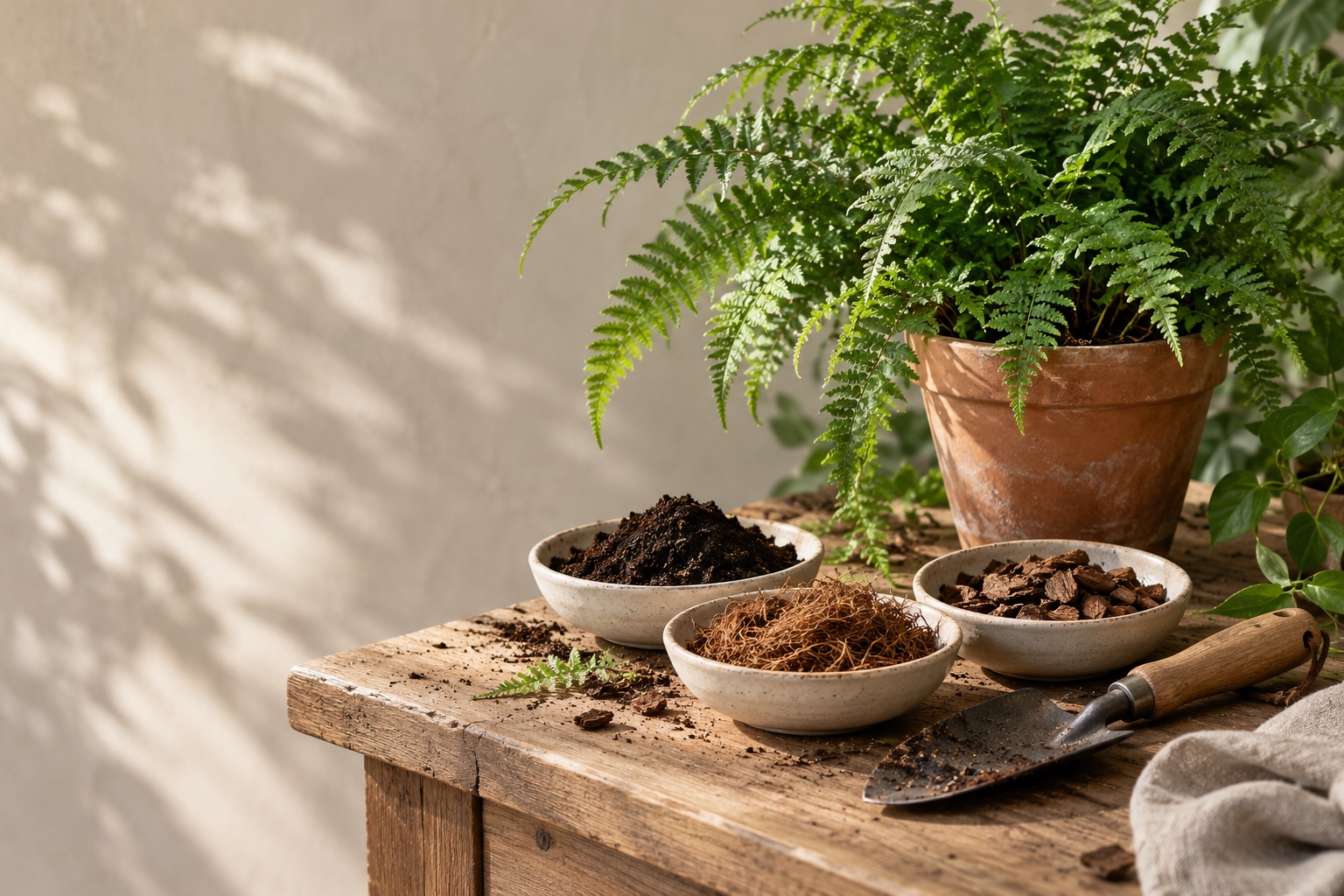
A growing medium supports roots and manages their immediate environment. Compost is decomposed organic material that may be one ingredient in that medium. Fertilizer is added to supply nutrients. Maryland Extension notes that compost releases nutrients gradually and may not provide all the nutrition a container crop needs for an entire season.
Its guidance discusses container gardens, so do not copy an outdoor vegetable recipe straight into every houseplant pot. A product can contribute nutrients and change the mix at the same time; consider both effects.
Sources: University of Maryland Extension
Organic material is not an unlimited allowance
Oregon State warns that excessive compost can add too many soluble salts and nutrients, causing stressed or burned-looking plants. “Organic” does not make the amount irrelevant. Nor does a bag of compost tell you the exact contribution of every handful without product information or analysis.
This is why adding compost, worm castings and several plant foods at once makes a routine difficult to evaluate. Name each input and its purpose before deciding whether it belongs in the pot.
Make an ingredient inventory for the pot
Start with the bag your plant is already growing in. If it is unavailable, ask the nursery what mix and fertilizer were used. It is fine to record uncertainty. That is more useful than assuming the plant is in an unfertilized medium and beginning another full feeding program.
- Potting mix: name, date added and whether it contains fertilizer.
- Compost or castings: whether included in the mix or added separately.
- Plant food: product name, dilution and application dates.
- Unknowns: nursery treatment, unlabeled granules or an unrecorded previous dose.
Where Noot fits in that inventory
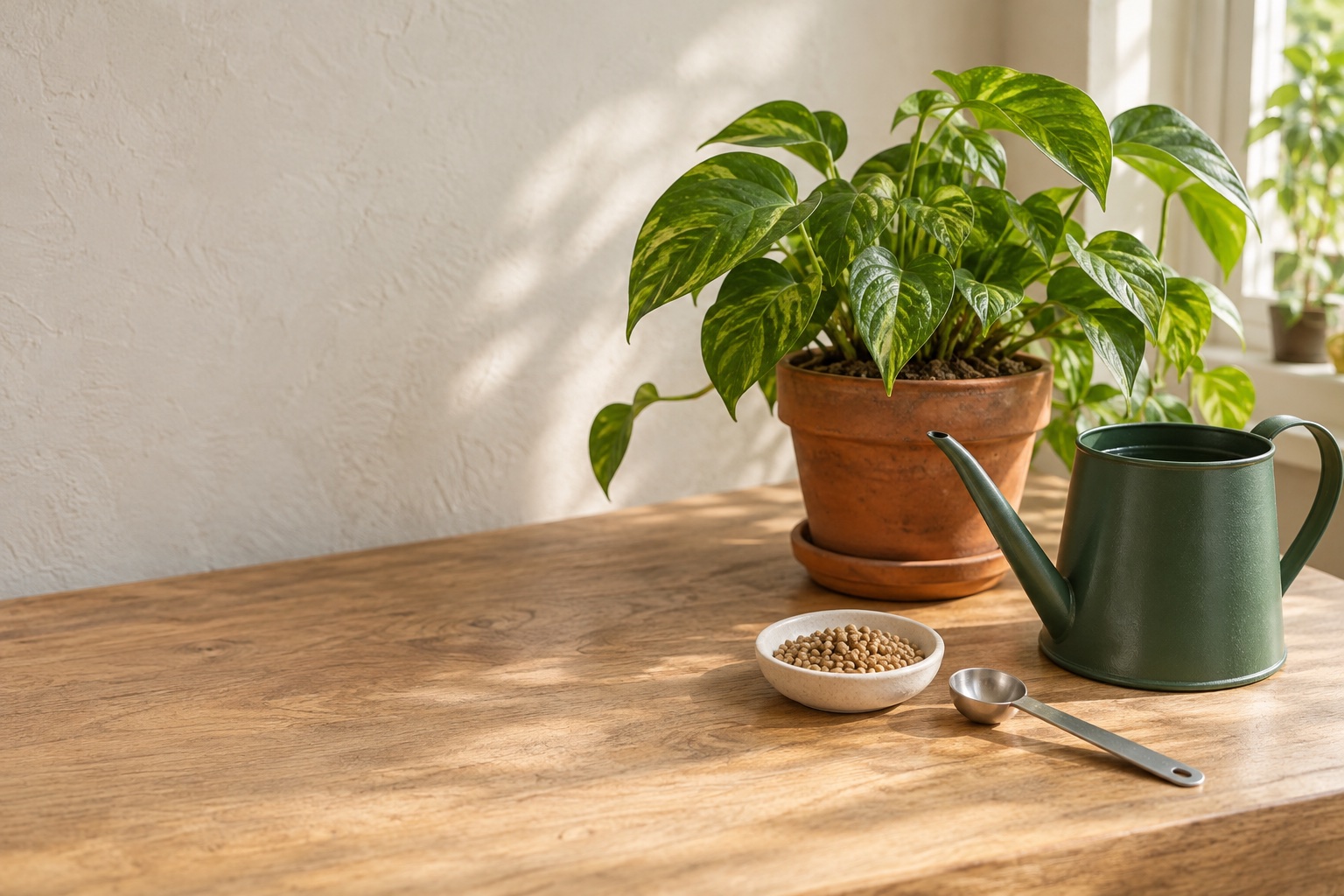
Noot Bio-Organic Plant Food combines organic inputs, trace minerals and 16 microbial strains. It is used as a diluted plant-food step, not as a replacement volume of potting mix. The directions are one teaspoon in half a gallon of water, during normal watering, following the label.
Check your plant variety in the finder and review other inputs before combining routines. Do not add an extra watering to deliver Noot to an already wet pot. If your mix has a built-in feeding program, ask about that combination instead of assuming that different product categories cannot overlap.
Sources: Noot
A practical shopping example
Suppose your shopping basket contains a fertilized potting mix, a bag of compost and Noot. Before using all three, make a small plan: which product supplies the growing medium, what the mix already includes, and when you will reassess feeding. You may find that you do not need every item for this repot.
Keep the labels together with the plant record. At the next care check, you can see what was added and when, rather than interpreting a yellow leaf from memory. A clear routine is easier to adjust than a sequence of unmeasured additions.
Common questions
Is compost always enough fertilizer for a houseplant?
No single answer fits every compost, plant and mix. Compost contributes nutrients, but its presence alone does not establish a complete feeding plan.
Does Noot replace potting mix?
No. Noot is diluted in water for use according to its label. Your plant still needs an appropriate growing medium and care.
Sources & further reading
- Growing Media (Potting Soil) for ContainersUniversity of Maryland Extension
- How to use compost in gardens and landscapesOregon State University Extension Service
- Noot plant-food directions and product informationNoot